
Gay and Hmong


Laura
Salinger is a
freelance
writer based
in Madison,
Wis.
Salinger is a
freelance
writer based
in Madison,
Wis.
Yet what about gay and lesbians who are not only waging this battle but who are also from a native culture that frowns upon
homosexuality? It is an uphill battle, indeed.
The Hmong culture is one steeped in tradition and history. One of the newer (and sometimes still misunderstood) refugee
groups to make their way to the U.S. in the last four decades, Hmong populations continue to struggle to penetrate the fabric of
this society and find acceptance here. Younger generations struggle with their dual identities: at once very American yet also
Hmong. Still, their success stories are many and Hmong Americans continue to make inroads in establishing themselves as
an important part of this diverse nation. As of late, however, more and more gay Hmong are speaking out about their
experience and they face the more difficult crusade of not only fighting to gain more acceptance in the mainstream as
minorities and LGBT individuals but among their native culture as well.
The Hmong culture, with a holistic and age-old religion, currently affords little recognition of gay or lesbian individuals. It is
something that is barely, if at all, discussed.
“There is no word for gay in the Hmong language,” acknowledges Sao Sue Jurewitsch in the Hmong Times. “Not because
there are no gay people in the Hmong community, but because homosexuality has long been a taboo.”
The first ever support group for LGBT Hmong was founded in 2003 in the Minneapolis/St. Paul area. Shades of Yellow (SOY)
simply began as a safe gathering place for LGBT Hmong to come together for social events and talk about the issues they
face in their homes and community. Within three years, however, the organization decided it was time to try and create change
and acceptance for LGBT Hmong in the community. In 2006, SOY became a formal organization and elected their first board of
directors. In 2009, SOY had hired their first executive and began implementing programs to create acceptance for and
awareness about LGBT Hmong. They are “out” and working to erase the shame that surrounds homosexuality in the Hmong
culture.
UW-Madison, and more specifically UW-Madison’s Asian American Studies, recently did their part in creating more
understanding about the challenges faced by LGBT Hmong by hosting “The Challenges of Hmong Gay Men in the United
States.” Vang T. Xiong, a doctoral student in Counselor Education and Supervision and an assistant professor in the Ethnic
Studies Department at Minnesota State University-Mankato, discussed his study which illuminated the specific and unique
challenges faced by gay Hmong men. His study addressed how Hmong men “come out” and how that changes their life, as
well as the cultural affects of being both gay and Hmong.
On his facebook page about the study, Vang T. Xiong says this: “In general, homosexuality is a taboo; therefore, it is not
discussed in the Hmong society. There is no word for gay male sexual orientation in the Hmong language. Even though male-
male relationships exist secretly within the culture, it is seldom discussed among family members or the 18 clans, due to the
fear and shame of breaking religious and cultural norms. As a result, research on Hmong gay men among ethnic clans is
scant. The main goal of (my) research project is to shed light on the experiences of Hmong gay males in Minnesota.”
According to Science Daily, it is not just LGBT Hmong who face unique challenges but Asian and Pacific Islanders in general.
“Young American-raised Asian and Pacific Islanders (API), who are in the sexual minority, face psychological and social
stresses in dealing with their families' values and ancestral cultures that significantly impact the development of their ethnic
and sexual identities,” reads the 2009 article. “API teens and young adults identified as gay, lesbian, bisexual, and
transgender face a different set of challenges than their western or Caucasian peers, which can lead to rejection from their
families who emigrated to the U.S. and a stigmatization by the larger Asian community.”
The truth is, in general, that being gay is hard. The Archives of Pediatric and Adolescent Medicine found that gay and
bisexual teens are more than three times as likely to attempt suicide as other youths. Gay suicide, of course, has made
national attention as of late in what ABC news calls “an eruption of gay teen suicides.” In 2002, among a rash of unsettling
suicides by Hmong youth in Fresno, CA, officials found 17-year-old Pa Nhia Xiong and 21-year-old Yee Yang submerged in
Millerton Lake. The lesbian couple was thought to have committed suicide because their love would not be accepted by the
culture and their families.
Hmong, and many other Asian American groups, face a double-duty challenge if they identify LGBT. Acceptance is hard-
won by the mainstream and often their own families. Yet, what was once taboo even to utter, is gaining recognition, and
hopefully more acceptance, as more brave LGBT Asian Americans speak out.
homosexuality? It is an uphill battle, indeed.
The Hmong culture is one steeped in tradition and history. One of the newer (and sometimes still misunderstood) refugee
groups to make their way to the U.S. in the last four decades, Hmong populations continue to struggle to penetrate the fabric of
this society and find acceptance here. Younger generations struggle with their dual identities: at once very American yet also
Hmong. Still, their success stories are many and Hmong Americans continue to make inroads in establishing themselves as
an important part of this diverse nation. As of late, however, more and more gay Hmong are speaking out about their
experience and they face the more difficult crusade of not only fighting to gain more acceptance in the mainstream as
minorities and LGBT individuals but among their native culture as well.
The Hmong culture, with a holistic and age-old religion, currently affords little recognition of gay or lesbian individuals. It is
something that is barely, if at all, discussed.
“There is no word for gay in the Hmong language,” acknowledges Sao Sue Jurewitsch in the Hmong Times. “Not because
there are no gay people in the Hmong community, but because homosexuality has long been a taboo.”
The first ever support group for LGBT Hmong was founded in 2003 in the Minneapolis/St. Paul area. Shades of Yellow (SOY)
simply began as a safe gathering place for LGBT Hmong to come together for social events and talk about the issues they
face in their homes and community. Within three years, however, the organization decided it was time to try and create change
and acceptance for LGBT Hmong in the community. In 2006, SOY became a formal organization and elected their first board of
directors. In 2009, SOY had hired their first executive and began implementing programs to create acceptance for and
awareness about LGBT Hmong. They are “out” and working to erase the shame that surrounds homosexuality in the Hmong
culture.
UW-Madison, and more specifically UW-Madison’s Asian American Studies, recently did their part in creating more
understanding about the challenges faced by LGBT Hmong by hosting “The Challenges of Hmong Gay Men in the United
States.” Vang T. Xiong, a doctoral student in Counselor Education and Supervision and an assistant professor in the Ethnic
Studies Department at Minnesota State University-Mankato, discussed his study which illuminated the specific and unique
challenges faced by gay Hmong men. His study addressed how Hmong men “come out” and how that changes their life, as
well as the cultural affects of being both gay and Hmong.
On his facebook page about the study, Vang T. Xiong says this: “In general, homosexuality is a taboo; therefore, it is not
discussed in the Hmong society. There is no word for gay male sexual orientation in the Hmong language. Even though male-
male relationships exist secretly within the culture, it is seldom discussed among family members or the 18 clans, due to the
fear and shame of breaking religious and cultural norms. As a result, research on Hmong gay men among ethnic clans is
scant. The main goal of (my) research project is to shed light on the experiences of Hmong gay males in Minnesota.”
According to Science Daily, it is not just LGBT Hmong who face unique challenges but Asian and Pacific Islanders in general.
“Young American-raised Asian and Pacific Islanders (API), who are in the sexual minority, face psychological and social
stresses in dealing with their families' values and ancestral cultures that significantly impact the development of their ethnic
and sexual identities,” reads the 2009 article. “API teens and young adults identified as gay, lesbian, bisexual, and
transgender face a different set of challenges than their western or Caucasian peers, which can lead to rejection from their
families who emigrated to the U.S. and a stigmatization by the larger Asian community.”
The truth is, in general, that being gay is hard. The Archives of Pediatric and Adolescent Medicine found that gay and
bisexual teens are more than three times as likely to attempt suicide as other youths. Gay suicide, of course, has made
national attention as of late in what ABC news calls “an eruption of gay teen suicides.” In 2002, among a rash of unsettling
suicides by Hmong youth in Fresno, CA, officials found 17-year-old Pa Nhia Xiong and 21-year-old Yee Yang submerged in
Millerton Lake. The lesbian couple was thought to have committed suicide because their love would not be accepted by the
culture and their families.
Hmong, and many other Asian American groups, face a double-duty challenge if they identify LGBT. Acceptance is hard-
won by the mainstream and often their own families. Yet, what was once taboo even to utter, is gaining recognition, and
hopefully more acceptance, as more brave LGBT Asian Americans speak out.

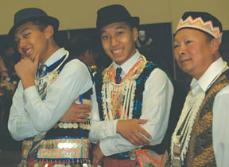
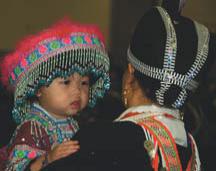
| The Hmong culture, with a holistic and age-old religion, currently affords little recognition of gay or lesbian individuals. It is something that is barely, if at all, discussed. (Photo: Hmong New Year at Dane County Alliant Energy Center, Nov. 2009-HM Pascual) |
By Laura Salinger
The history of the U.S. is ripe with
narratives of the uphill battles waged by its
fringe and minority groups before they are
welcomed into the folds of this diverse, yet
sometimes polarizing, country. Whether it is
a difference in the color of skin, religion,
sexual identity or culture there seems to
always be a group or groups of people who
are not quite welcome or “other.” Currently, of
course, there are many groups of people
who find themselves here. LGBT Americans
are one such group, as they fight to gain
acceptance and equal rights in mainstream
America.
The history of the U.S. is ripe with
narratives of the uphill battles waged by its
fringe and minority groups before they are
welcomed into the folds of this diverse, yet
sometimes polarizing, country. Whether it is
a difference in the color of skin, religion,
sexual identity or culture there seems to
always be a group or groups of people who
are not quite welcome or “other.” Currently, of
course, there are many groups of people
who find themselves here. LGBT Americans
are one such group, as they fight to gain
acceptance and equal rights in mainstream
America.