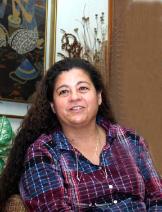
An interview with UW's Lynet Uttal
Making the Asian American experience visible through learning
Making the Asian American experience visible through learning
| OCTOBER 2011 ARCHIVES |

By Heidi M. Pascual
Part 2 of 2
It was “quite an accident of fate” that Lynet Uttal became the director of the
University of Wisconsin-Madison’s Asian American Studies Program. Although
Uttal has been a faculty affiliate of Asian American Studies since 2003, she
never considered being in that position. But four years into her position, Uttal
has loved her work as she learned the importance of the program in terms of
education offering and how it also helps her grow professionally. She has led the
hosting of several new initiatives that attracted members of the Madison
community's Asian American population.
In addition to targeted UW students, Asian Am also appeals to the Asian
American community outside the university setting through its events and
service learning classes.
“For the last three years we have been hosting ‘Critical Perspectives in Hmong
American Experiences and Scholarship’ and this has also attracted some
Part 2 of 2
It was “quite an accident of fate” that Lynet Uttal became the director of the
University of Wisconsin-Madison’s Asian American Studies Program. Although
Uttal has been a faculty affiliate of Asian American Studies since 2003, she
never considered being in that position. But four years into her position, Uttal
has loved her work as she learned the importance of the program in terms of
education offering and how it also helps her grow professionally. She has led the
hosting of several new initiatives that attracted members of the Madison
community's Asian American population.
In addition to targeted UW students, Asian Am also appeals to the Asian
American community outside the university setting through its events and
service learning classes.
“For the last three years we have been hosting ‘Critical Perspectives in Hmong
American Experiences and Scholarship’ and this has also attracted some
Lynet Uttal at one of WOAA's
meetings
meetings
community members to our talks, “ Uttal said. “Jan Miyasaki and I both teach service learning and community based
research courses in which students work with different organizations serving Asian American in Madison to address
contemporary social needs,” Uttal said. “Sometimes the Asian Am Studies Program partners with the Wisconsin
Organization of Asian Americans (WOAA) to do educational sessions in the community. Recently, Jan's students pulled
together information about immigration that was presented at a WOAA meeting.”
Describing other approaches (besides lectures and courses) Asian Am pursues, Uttal talked about the creative element
infused in Peggy Choy’s classes, as well as Asian Am support for worthy causes.
“Prof. Peggy Choy uses dance as a medium to teach about Asian Americans in her classroom,” she stressed. “As a whole
program, we endorsed the Teaching Assistants Association (TAA) activities in state politics in Spring last year. And, we will
be reinvigorating the Amy Ling Scholarship Award this year. Amy Ling was the first director of Asian American Studies from
1991-1998.”
According to Uttal, her office will pursue the following activities within the rest of this year:
1) enhancing the critical race perspective of the program;
2) strengthening Hmong American Studies in the Program’s curriculum, while at the same time maintaining excellence in
a specialization in Asian American literature, and
3) offering a place for Asian American students to look at themselves through an academic perspective and for students of
non-Asian heritage to better understand the experiences of Asian Americans in the United States.
“We will have day devoted to Asian Americans on Tuesday, Oct 4 during Ethnic Studies Week, Oct 1-7, “ Uttal said. “This
will be a one day teach-in about Asian Americans and Asian Immigrants in the U.S. As I mentioned above, we are hosting
the Hmong/American/Diaspora Institute to promote the professional development of scholars in the new field of Hmong
Studies.”
Uttal also touched on a proposal for a tenure track line in Hmong American Studies and its impact on their current
governance style.
‘We govern ourselves in a unique way,” she explained. “In the Asian Am Studies Program, we have established a Program
Advisory Committee of faculty, academic staff, and classified staff that is responsible for almost all of the Program’s
decision-making. Even though University policy requires us to have an Executive Committee for personnel matters (which
only tenured faculty are official voting members of), we do all our other decision making in a Program Advisory Committee
that includes faculty, academic staff, our program administrator and graduate student project assistant. In the Program
Advisory Committee, the voice of the graduate program assistant is equal to a tenured faculty member. We can share
governance with the Advisory Committee because the current Executive Committee requests the Advisory Committee to
advise on everything but individual personnel matters (such as tenure cases). In the Program Advisory Committee
business is conducted once a year in our annual face-to-face meeting and by email throughout the year.”
The recent budget cuts surely affected Asian Am programming in lots of ways, and Uttal explained in no uncertain terms
how she would work around it.
“The Asian American Studies Program is a program that is simultaneously an academic discipline and a point of support
for students from low presence racial/ethnic groups at UW-Madison,” she said. “Our course offerings will not be affected,
but we are going to have to cut back on our programming this year due to the budget cuts. We will not be able to bring in as
many speakers as we have in past years nor support students as much.
“Every program has dreams of expanding its numbers of faculty and the Asiam Am Studies Program has a serious need
for a professor who does research in Hmong American Studies, as well as two more who can teach about Asian
Americans from a sociological or psychological perspective.
“We write for grants to support a lot of our funding and that will just be more important that we do more grant writing this
year.”
Despite the many challenges Uttal is facing, she mentioned some happy moments that make her work satisfying.
“My happiest moment is when I can support someone whose work is contributing to Asian American Studies,” she said
matter-of-factly. “Part of the problem with invisibility is that people often feel that their accomplishments go unnoticed. The
Asian American Studies Program is an important mechanism for highlighting those accomplishments--whether it is a new
book, such as those by Leslie Bow and Morris Young, or if it organizing an event that brings us together as a community,
like Victor Jew when he worked with students to produce the three day Asian American Voices program.
“I am also really proud of the Visiting Assistant Professor (VAP) in Hmong American Studies initiative we have been
working on for the last 3.5 years. It immediately provided Hmong students with four courses per year on Hmong
Americans...something the Hmong community and students were actively asking for. It has heightened the consciousness
of Hmong students, non-Hmong students, and faculty about the largest Asian heritage group in Wisconsin. This VAP
position has done more to move our curriculum and the field of Hmong Studies ahead than a single professor in Hmong
Studies could have done. It has formed a solid foundation for us to make a wise choice about future tenure track hires in
Hmong American Studies.”
Of her many challenges, Uttal specified that Asian Am is a program made up mostly of volunteers, and its academic staff,
part-time.
“One ongoing challenge for the Asian American Studies Program is that it is nobody's "home": all affiliated faculty, staff and
students have some other program that has a first claim on loyalty, time and resources,” Uttal said. “As a program we are
not a tenure home for faculty and all of our academic staff are part-time. What this means is that their participation is only
as deep as they choose. That means whatever happens is based on people's goodwill and interest. For example,
academic staff often cannot take time away from their paid jobs to participate in the Asian American Studies Program.
Because everyone is overworked these days, you can imagine how hard it is to count on a volunteer group. So we have to
do business differently than departments who depend on faculty. It is important to make sure that non-budgeted faculty
and staff feel as valued as professors with joint appointments. This is both a challenge and a benefit. It means that we can
be more democratic and include staff and students in how we do things. Yet, it also means we are at the mercy of people's
volunteer willingness to help the program carry out its mission.”
Uttal added that if UW were not facing such severe budget cuts, Asian Am would work harder to get the administration's
commitment to new faculty lines, because those lines would also provide more stability to the program.
Hope for the future of Asian Am Studies Program
“In the context of how business is normally done at the University and how unappreciated people feel, I hope the Asian Am
Studies Program can be a new model of how to value people's contributions while at the same time eventually putting
resources behind this valuing,” Uttal emphasized. “I also hope that our attention to critical race studies will develop a
model of race that includes Asian Americans and moves beyond the binary Black/White or triracialization models that
currently neglect to include Asian Americans and their histories.
“I hope that in the future the Program can hire faculty whose tenure home can be in Asian American Studies. As much as
we dream of interdisciplinary positions, the reality is that without having a primary say in the tenure process, the Asian
American Studies Program will not be able to form a stable foundation.”
Asian Americans are a pan-ethnic group. Unlike Blacks who share a racial commonality, or Latinos who share a language
commonality, Asian Americans do not have such a clear cut commonality that unites us all. Some ethnic groups who are
racially classified as Asian do not necessarily see themselves as “Asian Americans” (e.g., Hmong in Wisconsin). And
several of these groups have social histories that include great animosity between their countries of origin (e.g., Japan and
Korea.) Are we just a census bureau accident (Asian Americans and Pacific Islanders) or do we have something more
significant that knits us together as an interest group? These are some of the ideas that we explore in Asian American
Studies daily as we combat our invisibility in race studies and as political constituencies in the U.S.
research courses in which students work with different organizations serving Asian American in Madison to address
contemporary social needs,” Uttal said. “Sometimes the Asian Am Studies Program partners with the Wisconsin
Organization of Asian Americans (WOAA) to do educational sessions in the community. Recently, Jan's students pulled
together information about immigration that was presented at a WOAA meeting.”
Describing other approaches (besides lectures and courses) Asian Am pursues, Uttal talked about the creative element
infused in Peggy Choy’s classes, as well as Asian Am support for worthy causes.
“Prof. Peggy Choy uses dance as a medium to teach about Asian Americans in her classroom,” she stressed. “As a whole
program, we endorsed the Teaching Assistants Association (TAA) activities in state politics in Spring last year. And, we will
be reinvigorating the Amy Ling Scholarship Award this year. Amy Ling was the first director of Asian American Studies from
1991-1998.”
According to Uttal, her office will pursue the following activities within the rest of this year:
1) enhancing the critical race perspective of the program;
2) strengthening Hmong American Studies in the Program’s curriculum, while at the same time maintaining excellence in
a specialization in Asian American literature, and
3) offering a place for Asian American students to look at themselves through an academic perspective and for students of
non-Asian heritage to better understand the experiences of Asian Americans in the United States.
“We will have day devoted to Asian Americans on Tuesday, Oct 4 during Ethnic Studies Week, Oct 1-7, “ Uttal said. “This
will be a one day teach-in about Asian Americans and Asian Immigrants in the U.S. As I mentioned above, we are hosting
the Hmong/American/Diaspora Institute to promote the professional development of scholars in the new field of Hmong
Studies.”
Uttal also touched on a proposal for a tenure track line in Hmong American Studies and its impact on their current
governance style.
‘We govern ourselves in a unique way,” she explained. “In the Asian Am Studies Program, we have established a Program
Advisory Committee of faculty, academic staff, and classified staff that is responsible for almost all of the Program’s
decision-making. Even though University policy requires us to have an Executive Committee for personnel matters (which
only tenured faculty are official voting members of), we do all our other decision making in a Program Advisory Committee
that includes faculty, academic staff, our program administrator and graduate student project assistant. In the Program
Advisory Committee, the voice of the graduate program assistant is equal to a tenured faculty member. We can share
governance with the Advisory Committee because the current Executive Committee requests the Advisory Committee to
advise on everything but individual personnel matters (such as tenure cases). In the Program Advisory Committee
business is conducted once a year in our annual face-to-face meeting and by email throughout the year.”
The recent budget cuts surely affected Asian Am programming in lots of ways, and Uttal explained in no uncertain terms
how she would work around it.
“The Asian American Studies Program is a program that is simultaneously an academic discipline and a point of support
for students from low presence racial/ethnic groups at UW-Madison,” she said. “Our course offerings will not be affected,
but we are going to have to cut back on our programming this year due to the budget cuts. We will not be able to bring in as
many speakers as we have in past years nor support students as much.
“Every program has dreams of expanding its numbers of faculty and the Asiam Am Studies Program has a serious need
for a professor who does research in Hmong American Studies, as well as two more who can teach about Asian
Americans from a sociological or psychological perspective.
“We write for grants to support a lot of our funding and that will just be more important that we do more grant writing this
year.”
Despite the many challenges Uttal is facing, she mentioned some happy moments that make her work satisfying.
“My happiest moment is when I can support someone whose work is contributing to Asian American Studies,” she said
matter-of-factly. “Part of the problem with invisibility is that people often feel that their accomplishments go unnoticed. The
Asian American Studies Program is an important mechanism for highlighting those accomplishments--whether it is a new
book, such as those by Leslie Bow and Morris Young, or if it organizing an event that brings us together as a community,
like Victor Jew when he worked with students to produce the three day Asian American Voices program.
“I am also really proud of the Visiting Assistant Professor (VAP) in Hmong American Studies initiative we have been
working on for the last 3.5 years. It immediately provided Hmong students with four courses per year on Hmong
Americans...something the Hmong community and students were actively asking for. It has heightened the consciousness
of Hmong students, non-Hmong students, and faculty about the largest Asian heritage group in Wisconsin. This VAP
position has done more to move our curriculum and the field of Hmong Studies ahead than a single professor in Hmong
Studies could have done. It has formed a solid foundation for us to make a wise choice about future tenure track hires in
Hmong American Studies.”
Of her many challenges, Uttal specified that Asian Am is a program made up mostly of volunteers, and its academic staff,
part-time.
“One ongoing challenge for the Asian American Studies Program is that it is nobody's "home": all affiliated faculty, staff and
students have some other program that has a first claim on loyalty, time and resources,” Uttal said. “As a program we are
not a tenure home for faculty and all of our academic staff are part-time. What this means is that their participation is only
as deep as they choose. That means whatever happens is based on people's goodwill and interest. For example,
academic staff often cannot take time away from their paid jobs to participate in the Asian American Studies Program.
Because everyone is overworked these days, you can imagine how hard it is to count on a volunteer group. So we have to
do business differently than departments who depend on faculty. It is important to make sure that non-budgeted faculty
and staff feel as valued as professors with joint appointments. This is both a challenge and a benefit. It means that we can
be more democratic and include staff and students in how we do things. Yet, it also means we are at the mercy of people's
volunteer willingness to help the program carry out its mission.”
Uttal added that if UW were not facing such severe budget cuts, Asian Am would work harder to get the administration's
commitment to new faculty lines, because those lines would also provide more stability to the program.
Hope for the future of Asian Am Studies Program
“In the context of how business is normally done at the University and how unappreciated people feel, I hope the Asian Am
Studies Program can be a new model of how to value people's contributions while at the same time eventually putting
resources behind this valuing,” Uttal emphasized. “I also hope that our attention to critical race studies will develop a
model of race that includes Asian Americans and moves beyond the binary Black/White or triracialization models that
currently neglect to include Asian Americans and their histories.
“I hope that in the future the Program can hire faculty whose tenure home can be in Asian American Studies. As much as
we dream of interdisciplinary positions, the reality is that without having a primary say in the tenure process, the Asian
American Studies Program will not be able to form a stable foundation.”
Asian Americans are a pan-ethnic group. Unlike Blacks who share a racial commonality, or Latinos who share a language
commonality, Asian Americans do not have such a clear cut commonality that unites us all. Some ethnic groups who are
racially classified as Asian do not necessarily see themselves as “Asian Americans” (e.g., Hmong in Wisconsin). And
several of these groups have social histories that include great animosity between their countries of origin (e.g., Japan and
Korea.) Are we just a census bureau accident (Asian Americans and Pacific Islanders) or do we have something more
significant that knits us together as an interest group? These are some of the ideas that we explore in Asian American
Studies daily as we combat our invisibility in race studies and as political constituencies in the U.S.