


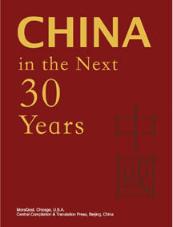
Publishing China in the Next 30 Years
in Digital Format
in Digital Format

Jian Ping
Jian Ping is author of “Mulberry Child: A Memoir of
China. “ For more information, visit www.moraquest.
com or www.mulberrychild.com. Jian Ping’s blog,
which she keeps with a couple of other authors, is at
www.smearedtype.com.
China. “ For more information, visit www.moraquest.
com or www.mulberrychild.com. Jian Ping’s blog,
which she keeps with a couple of other authors, is at
www.smearedtype.com.



| If you want to make a difference in the lives of our residents, visit our website to view and apply for our current openings. www.oakwoodvillage.net Oakwood Village is a Lutheran church-sponsored, not-for-profit, locally operated organization consisting of two continuing care retirement communities, Oakwood Village East and Oakwood Village West, in Madison, Wisconsin. EOE |
| Caring for older adults through compassionate and excellent service |
my own, using the editions released in China as reference. In an effort to do a better job, I put aside
my PC laptop and bought a new MacBook Pro. I started from scratch, learning to use Pages, the
equivalent of Word in Microsoft Office. Different from Word, Pages has a lot of flexibility in making
designs and converting word documents to ePub, a digital format for ebooks at iTunes and Barnes
and Noble.com.
I was fascinated by the power and user friendly features of Pages, and meantime, I must say, was
overwhelmed by how much I had to learn. To take a "short cut", I signed up for Apple's tutoring
services for a year, wanting to take advantage of the unlimited "one-to-one" coaching at Apple Stores.
I remember the first time I clicked on "inspector" and explored the variety of functions it had to offer. I
was hooked. For three weeks, I ended up taking lessons at the Apple Store on Michigan Avenue in
Chicago nearly every other day.
I admit I was, and still am, very technically "challenged", to put it mildly. I have spent hours fighting or
negotiating each step of my way with my computer. During this initial intense learning period, I slept
little and rushed through lunches and dinners, a big sacrifice since I relish each of the three meals
in a day.
One Sunday morning, I rode my bicycle to the Apple Store on Michigan Avenue and was thrilled to
learn a few "new tricks." When I stepped out of the store an hour later to the bike rack at the corner of
Michigan and Huron, my bicycle was no where to be found. Someone either cut my bike chain or
watched me when I parked my bike—I never shifted my lock combination too much, making it easier
to unlock when I was ready to go. I was really upset, but also annoyed with myself.
The experience, disheartening at it was, didn't deter me from continuing my lessons. Soon I was
able to use Pages to create all the hyperlinks I needed for the table of contents. I was thrilled when
the links were working when I converted the entire file of the book to PDF and ePub.
But my excitement didn't last long. I soon realized that the major ebook retailers, namely Kindle, B&N.
com and iTunes, didn't support Chinese characters. One essay in the book titled "Understanding
China's Great 'Civilization-state Model', Carrying forward the Internal Energies of Chinese
Civilization" by Mr. Tan Chung, listed many names and phrases in Chinese, along with their English
translations. With regret, I had to pull off the submitted files, delete all the Chinese and resubmit
again.
I eventually posted the final version onto the Websites of all the major ebook retailers. After reviewing
each Website's "conversation", of which Smashwords.com literally refers to as "meatgrinder", I found
out the layout on each site was different from my original, particularly the front matters, with the table
of content most problematic.
my PC laptop and bought a new MacBook Pro. I started from scratch, learning to use Pages, the
equivalent of Word in Microsoft Office. Different from Word, Pages has a lot of flexibility in making
designs and converting word documents to ePub, a digital format for ebooks at iTunes and Barnes
and Noble.com.
I was fascinated by the power and user friendly features of Pages, and meantime, I must say, was
overwhelmed by how much I had to learn. To take a "short cut", I signed up for Apple's tutoring
services for a year, wanting to take advantage of the unlimited "one-to-one" coaching at Apple Stores.
I remember the first time I clicked on "inspector" and explored the variety of functions it had to offer. I
was hooked. For three weeks, I ended up taking lessons at the Apple Store on Michigan Avenue in
Chicago nearly every other day.
I admit I was, and still am, very technically "challenged", to put it mildly. I have spent hours fighting or
negotiating each step of my way with my computer. During this initial intense learning period, I slept
little and rushed through lunches and dinners, a big sacrifice since I relish each of the three meals
in a day.
One Sunday morning, I rode my bicycle to the Apple Store on Michigan Avenue and was thrilled to
learn a few "new tricks." When I stepped out of the store an hour later to the bike rack at the corner of
Michigan and Huron, my bicycle was no where to be found. Someone either cut my bike chain or
watched me when I parked my bike—I never shifted my lock combination too much, making it easier
to unlock when I was ready to go. I was really upset, but also annoyed with myself.
The experience, disheartening at it was, didn't deter me from continuing my lessons. Soon I was
able to use Pages to create all the hyperlinks I needed for the table of contents. I was thrilled when
the links were working when I converted the entire file of the book to PDF and ePub.
But my excitement didn't last long. I soon realized that the major ebook retailers, namely Kindle, B&N.
com and iTunes, didn't support Chinese characters. One essay in the book titled "Understanding
China's Great 'Civilization-state Model', Carrying forward the Internal Energies of Chinese
Civilization" by Mr. Tan Chung, listed many names and phrases in Chinese, along with their English
translations. With regret, I had to pull off the submitted files, delete all the Chinese and resubmit
again.
I eventually posted the final version onto the Websites of all the major ebook retailers. After reviewing
each Website's "conversation", of which Smashwords.com literally refers to as "meatgrinder", I found
out the layout on each site was different from my original, particularly the front matters, with the table
of content most problematic.
Obviously, China has achieved phenomenal
economic growth in the last 30 years. In order for
China to emerge as a global powerhouse, political
reforms will have to continue.
Can China maintain its development at such a rate
moving forward? The 17 essays collected in the
book trace the steps of China’s recent
accomplishments and offer their views on how
China can proceed.
As an author and publisher, I'm excited to introduce
China in the Next 30 Years. In the months and years
to come, I'll be releasing more books on China and
cross-cultural topics.
economic growth in the last 30 years. In order for
China to emerge as a global powerhouse, political
reforms will have to continue.
Can China maintain its development at such a rate
moving forward? The 17 essays collected in the
book trace the steps of China’s recent
accomplishments and offer their views on how
China can proceed.
As an author and publisher, I'm excited to introduce
China in the Next 30 Years. In the months and years
to come, I'll be releasing more books on China and
cross-cultural topics.

| Robert Fogel |

| Michael Hudson |

| Wang Huiyao |
| Yu Keping |
By Jian Ping
When I was in China in June, I met with a few people at a major publisher who showed me a
recently released book titled China in the Next 30 Years. It was a collection of 17 essays
written by well-known scholars in China and the West. I took a look at the table of contents
and got interested immediately. I left the meeting with two copies of the book, one in English,
and the other in Chinese. Before I returned to the U.S., I had committed to release the book in
digital format through my own publishing company MoraQuest in the U.S. and some other
countries in the world.
Over the past two years I've given more than 80 talks about China at book groups, libraries,
business and social organizations, schools and universities. One thing that keeps coming to
my attention is the genuine interest of my American audience in China and the lack of
understanding about this far-away country. I had been thinking about ways in which I can play
a more effective role in reaching a broader audience and bridging the gap between the
When I was in China in June, I met with a few people at a major publisher who showed me a
recently released book titled China in the Next 30 Years. It was a collection of 17 essays
written by well-known scholars in China and the West. I took a look at the table of contents
and got interested immediately. I left the meeting with two copies of the book, one in English,
and the other in Chinese. Before I returned to the U.S., I had committed to release the book in
digital format through my own publishing company MoraQuest in the U.S. and some other
countries in the world.
Over the past two years I've given more than 80 talks about China at book groups, libraries,
business and social organizations, schools and universities. One thing that keeps coming to
my attention is the genuine interest of my American audience in China and the lack of
understanding about this far-away country. I had been thinking about ways in which I can play
a more effective role in reaching a broader audience and bridging the gap between the
U.S. and China.
Most of my talks are focused primarily on China in the 1960s and
1970s, as described in my book Mulberry Child: A Memoir of China.
However, I'm keenly aware that China has made a transformation
over the last 30 years thanks to economic and political reform, and I
always like to reserve a few minutes to address China today. When I
had a chance to read China in the Next 30 Years, I realized this book
could be a very effective vehicle to present the contemporary China
to the West, with an in-depth examination of its recent past and a
forecast about its future.
Shortly after my return to Chicago, the Chinese publisher in Beijing
provided me with all the materials I needed to release the book in
digital format. I was very excited. Instead of turning to the network I
used before for cover design and page layout, I decided to do it on
Most of my talks are focused primarily on China in the 1960s and
1970s, as described in my book Mulberry Child: A Memoir of China.
However, I'm keenly aware that China has made a transformation
over the last 30 years thanks to economic and political reform, and I
always like to reserve a few minutes to address China today. When I
had a chance to read China in the Next 30 Years, I realized this book
could be a very effective vehicle to present the contemporary China
to the West, with an in-depth examination of its recent past and a
forecast about its future.
Shortly after my return to Chicago, the Chinese publisher in Beijing
provided me with all the materials I needed to release the book in
digital format. I was very excited. Instead of turning to the network I
used before for cover design and page layout, I decided to do it on
I pored over the guideline posted on each Website and tried to figure out the ways to fix my problem. My head started spinning
and the html code mortified me. After fighting with my inertia as well as the technical challenge, I decided I was not going to
spend another week to grinding through the procedures. I released the titles the way they were posted. Hopefully in the next
week or so when my mind is more receptive, I can dive into it again and solve the problem.
Fortunately, the text of the book, which is outstanding in content, came out perfect. With both Chinese and Western scholars
as contributors, the seventeen essays reflect, overall, balanced perspectives on the current reform and future development of
China.
Here are a few statements from the authors:
• Robert Fogel, a Nobel laureate in economics, predicts that the Chinese economy will reach $123 trillion and per capita
income will hit $85,000 by 2040, ranking it among the super-rich nations in the world.
• Michael Hudson, a Wall Street financial analyst and professor, warned that "China must resist not only western financial
incursion, but domestic emulation of neoliberal economic and tax polities—the temptation of ambitious emerging elites to
replicate the path that has led to the decline of the West."
• Wang Huiyao, Founding Director of the Center for China and Globalization, pointed out that the Chinese “development
model” is not fixed. “Crossing a river by feeling the stones underfoot”- the mantra advocated by Deng Xiaoping, will likely
remain the guiding principle for pragmatic action and swift adaptation.
• Yu Keping, Vice Director of the Central Compilation & Translation Bureau, observed that the biggest challenges faced by
the Chinese government lie in social problems such as "social inequality, the growing gap between the rich and poor,
serious corruption among public officials, social instability, high crime rates, environmental degradation, and ignorance of
citizens' human rights." He stated that "the focus of China's reform in the next 30 years will gradually shift from economic
arena to social and political arena."
and the html code mortified me. After fighting with my inertia as well as the technical challenge, I decided I was not going to
spend another week to grinding through the procedures. I released the titles the way they were posted. Hopefully in the next
week or so when my mind is more receptive, I can dive into it again and solve the problem.
Fortunately, the text of the book, which is outstanding in content, came out perfect. With both Chinese and Western scholars
as contributors, the seventeen essays reflect, overall, balanced perspectives on the current reform and future development of
China.
Here are a few statements from the authors:
• Robert Fogel, a Nobel laureate in economics, predicts that the Chinese economy will reach $123 trillion and per capita
income will hit $85,000 by 2040, ranking it among the super-rich nations in the world.
• Michael Hudson, a Wall Street financial analyst and professor, warned that "China must resist not only western financial
incursion, but domestic emulation of neoliberal economic and tax polities—the temptation of ambitious emerging elites to
replicate the path that has led to the decline of the West."
• Wang Huiyao, Founding Director of the Center for China and Globalization, pointed out that the Chinese “development
model” is not fixed. “Crossing a river by feeling the stones underfoot”- the mantra advocated by Deng Xiaoping, will likely
remain the guiding principle for pragmatic action and swift adaptation.
• Yu Keping, Vice Director of the Central Compilation & Translation Bureau, observed that the biggest challenges faced by
the Chinese government lie in social problems such as "social inequality, the growing gap between the rich and poor,
serious corruption among public officials, social instability, high crime rates, environmental degradation, and ignorance of
citizens' human rights." He stated that "the focus of China's reform in the next 30 years will gradually shift from economic
arena to social and political arena."