


Proof of Filipino resilience in PAMANA's rebirth
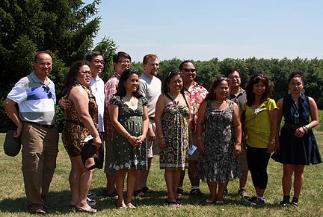
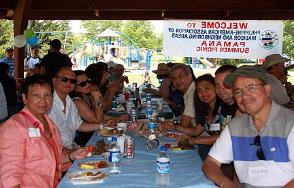
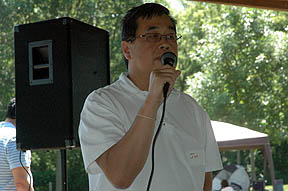
(Left) Jun
Gonzales is the
new PAMANA
president; (right)
a long table for
some PAMANA
members at the
Kitaan Muli sa
Piknik in Sun
Prairie; (Below
left) the new
board members
Gonzales is the
new PAMANA
president; (right)
a long table for
some PAMANA
members at the
Kitaan Muli sa
Piknik in Sun
Prairie; (Below
left) the new
board members
The Philippine American Association for Madison and Neighboring Areas (PAMANA) is an example of the Filipino
resilience. This organization was created about 30 years ago by a group of Filipino families in the Madison area for
purposes of camaraderie and friendship, and sharing their culture with others in the community. Because of the small
number of Filipino families in the area, the leaders thought it wise to bond together and strengthen each other, a natural
course for immigrants who miss home and family. The focus of PAMANA has continued through the years despite changes
in leadership: getting together to celebrate summer and special holidays, especially Christmas, and perform in the
community through native dances whenever possible.
But like any other volunteer organization, problems occur that threatened the very existence of the association. For the last
two years, PAMANA was in “hibernation” for lack of leadership. Concerned members got together repeatedly and strongly
advocated for the group’s resuscitation. No, they would never let PAMANA die. No, they would work hard to keep it alive! It’s
the Filipino community’s family away from home; it’s where the Filipino heart is, and they should keep it beating!
This is exactly the common denominator that drove these concerned PAMANA members to elect new officers in 2011 and
chart a new path for the association. PAMANA members decided to elect Modesto "Jun" Gonzales, a long-time PAMANA
board member, as their new president. Gonzales has been a very active PAMANA officer --always in the background --
doing the heavy work for years. He knew by heart what PAMANA should aim for and what is needed to make it happen.
“This year marks the revitalization of PAMANA,” Gonzales said during his speech at PAMANA’s summer picnic last July 9 in
Sun Prairie’s Sheenan Park, and looking back at the last two years, added, “The events were few and sparse.” Gonzales
knew then and now that the less gatherings, the less work could be done and the less “connection” with each other.
Gonzales noted that there is more diversity now among the PAMANA members and addressed the major problem of the
group—communication—by stating his main goal. “My short-term goal for the year that I am in office is to improve
communication,” he said. “We’ve done a lot of Facebooking and the social media stuff as well as a lot of e-mails.”
The result of this active communication with members using computer technology and social media was 200 people in
attendance. The number also proved the eagerness of the Filipino community to get back to where they were two years ago
and move forward.
Gonzales also mentioned the need to increase the dollar balance of the association’s coffers, a necessary first step to be
able to plan anything. “We are planning events, but we want to beef up the treasury first. It requires a good dollar amount
before we can host future events.”
To this end, members knew they have to pay their membership dues on time and help raise funds when needed. PAMANA
became a non-profit in January 2010, and Gonzales acknowledged the work of a few who were instrumental in getting the
association’s 501(c)(3) status.
The new PAMANA president also touched upon the Filipino values that Filipino children in America should learn. “Like one
of the board members mentioned, it is important for the children to experience what the values of The Philippines are and
transfer those values to the children,” he said. “It’s all about the children being the future.”
Gonzales also said that PAMANA would have a welcome committee to welcome new folks moving to Wisconsin.
In concluding his remarks, Gonzales thanked the past boards, the new officers, and all those who came to the summer
picnic and called on their continued support.
“Hopefully we can duplicate what the previous boards did and get the community more engaged and have more events
coming up,” he promised.
:
resilience. This organization was created about 30 years ago by a group of Filipino families in the Madison area for
purposes of camaraderie and friendship, and sharing their culture with others in the community. Because of the small
number of Filipino families in the area, the leaders thought it wise to bond together and strengthen each other, a natural
course for immigrants who miss home and family. The focus of PAMANA has continued through the years despite changes
in leadership: getting together to celebrate summer and special holidays, especially Christmas, and perform in the
community through native dances whenever possible.
But like any other volunteer organization, problems occur that threatened the very existence of the association. For the last
two years, PAMANA was in “hibernation” for lack of leadership. Concerned members got together repeatedly and strongly
advocated for the group’s resuscitation. No, they would never let PAMANA die. No, they would work hard to keep it alive! It’s
the Filipino community’s family away from home; it’s where the Filipino heart is, and they should keep it beating!
This is exactly the common denominator that drove these concerned PAMANA members to elect new officers in 2011 and
chart a new path for the association. PAMANA members decided to elect Modesto "Jun" Gonzales, a long-time PAMANA
board member, as their new president. Gonzales has been a very active PAMANA officer --always in the background --
doing the heavy work for years. He knew by heart what PAMANA should aim for and what is needed to make it happen.
“This year marks the revitalization of PAMANA,” Gonzales said during his speech at PAMANA’s summer picnic last July 9 in
Sun Prairie’s Sheenan Park, and looking back at the last two years, added, “The events were few and sparse.” Gonzales
knew then and now that the less gatherings, the less work could be done and the less “connection” with each other.
Gonzales noted that there is more diversity now among the PAMANA members and addressed the major problem of the
group—communication—by stating his main goal. “My short-term goal for the year that I am in office is to improve
communication,” he said. “We’ve done a lot of Facebooking and the social media stuff as well as a lot of e-mails.”
The result of this active communication with members using computer technology and social media was 200 people in
attendance. The number also proved the eagerness of the Filipino community to get back to where they were two years ago
and move forward.
Gonzales also mentioned the need to increase the dollar balance of the association’s coffers, a necessary first step to be
able to plan anything. “We are planning events, but we want to beef up the treasury first. It requires a good dollar amount
before we can host future events.”
To this end, members knew they have to pay their membership dues on time and help raise funds when needed. PAMANA
became a non-profit in January 2010, and Gonzales acknowledged the work of a few who were instrumental in getting the
association’s 501(c)(3) status.
The new PAMANA president also touched upon the Filipino values that Filipino children in America should learn. “Like one
of the board members mentioned, it is important for the children to experience what the values of The Philippines are and
transfer those values to the children,” he said. “It’s all about the children being the future.”
Gonzales also said that PAMANA would have a welcome committee to welcome new folks moving to Wisconsin.
In concluding his remarks, Gonzales thanked the past boards, the new officers, and all those who came to the summer
picnic and called on their continued support.
“Hopefully we can duplicate what the previous boards did and get the community more engaged and have more events
coming up,” he promised.
:
By Heidi M. Pascual
As a people, Filipinos have withstood centuries of colonization
by Western powers, and for a brief period during World War II,
by a conquering Asian military power. While many died
fighting for freedom, Filipinos in general are peace-loving and
would rather “compromise” for the common good. Filipinos
living abroad have withstood discrimination by focusing on
their goals—to be economically self-sufficient first, and
second, to provide their children a sure path to higher
education. When a Filipino falls, wherever he maybe, he/she
stands up again and works hard to recover. The Filipino
resilience is part of the culture.
As a people, Filipinos have withstood centuries of colonization
by Western powers, and for a brief period during World War II,
by a conquering Asian military power. While many died
fighting for freedom, Filipinos in general are peace-loving and
would rather “compromise” for the common good. Filipinos
living abroad have withstood discrimination by focusing on
their goals—to be economically self-sufficient first, and
second, to provide their children a sure path to higher
education. When a Filipino falls, wherever he maybe, he/she
stands up again and works hard to recover. The Filipino
resilience is part of the culture.

made it even worse that sent PAMANA into hiatus.
But thanks to the devotion of a few dedicated members, PAMANA is coming back again.
2) You accepted the position of Advisor. What would you tell the new president about things to expect and how he
could perform better?
The new president is a seasoned member of PAMANA. Jun was a leader before and a care taker when times are
quiet. He was always involved. He knows all the problems. The only thing I can say to him is to work harder and
make PAMANA enjoyable to Filipinos.
3) What qualities do you think of Jun G would make him an effective PAMANA president?
Jun is honest, sincere and responsible, He has the respect of all his peers.
4) What are expected from the members now that the organization is rebuilding itself?
Members should come forward and be counted. PAMANA needs fresh and young leaders.
5) What problems of the organization did you encounter and how should they be solved by the new officers?
The biggest problem is how to raise needed funds and how to boost membership. New officers should work
relentlessly and devote more time reaching out.
6) Any further thoughts to make PAMANA successful again?
There are so many obstacles and challenges along the road to Pamana's success. They are not easy to
overcome. No one dares to accept leadership voluntarily. It’s a staggering task. Unless there is one that really will
dedicate time, and probably money, and effort in a longer haul, only then will the Filipino community can be proud
of PAMANA.
But thanks to the devotion of a few dedicated members, PAMANA is coming back again.
2) You accepted the position of Advisor. What would you tell the new president about things to expect and how he
could perform better?
The new president is a seasoned member of PAMANA. Jun was a leader before and a care taker when times are
quiet. He was always involved. He knows all the problems. The only thing I can say to him is to work harder and
make PAMANA enjoyable to Filipinos.
3) What qualities do you think of Jun G would make him an effective PAMANA president?
Jun is honest, sincere and responsible, He has the respect of all his peers.
4) What are expected from the members now that the organization is rebuilding itself?
Members should come forward and be counted. PAMANA needs fresh and young leaders.
5) What problems of the organization did you encounter and how should they be solved by the new officers?
The biggest problem is how to raise needed funds and how to boost membership. New officers should work
relentlessly and devote more time reaching out.
6) Any further thoughts to make PAMANA successful again?
There are so many obstacles and challenges along the road to Pamana's success. They are not easy to
overcome. No one dares to accept leadership voluntarily. It’s a staggering task. Unless there is one that really will
dedicate time, and probably money, and effort in a longer haul, only then will the Filipino community can be proud
of PAMANA.

An Interview with former PAMANA President
Ed Escall
by Heidi M. Pascual
1) As former president of PAMANA, what accomplishments of the group
so far are you most proud of? Please elaborate.
From the time I took the leadership of PAMANA until today, I have little to
say on PAMANA's accomplishments, and probably nil after my term. At
least during my time, PAMANA went through its usual rituals - mostly
going through calendar events - spring fling picnic, Christmas and
Independence Day celebration, but nothing civic.
It was very quiet during my successor's term and even quieter when the
next successor resigned the first day of his term. The bad economy
Ed Escall
by Heidi M. Pascual
1) As former president of PAMANA, what accomplishments of the group
so far are you most proud of? Please elaborate.
From the time I took the leadership of PAMANA until today, I have little to
say on PAMANA's accomplishments, and probably nil after my term. At
least during my time, PAMANA went through its usual rituals - mostly
going through calendar events - spring fling picnic, Christmas and
Independence Day celebration, but nothing civic.
It was very quiet during my successor's term and even quieter when the
next successor resigned the first day of his term. The bad economy
| Former PAMANA Pres. Ed Escall |
An interview with PAMANA President Modesto "Jun" Gonzales
by Heidi M. Pascual
1) When did you start as a PAMANA member and why did you join it? What positions did you have?
I started in 1995. We moved here from Kansas for my wife's work. I met Romy Castillo the first night when we
arrived and he introduced us to PAMANA.
2) How many members does PAMANA now have? Are there plans for membership increase?
PAMANA has about 350 families. We plan to increase participation in events. Historically, participation has only been
about 10 to 30 percent of the membership.
3) Having been an active officer of Pamana in the past, what accomplishments of the group are you most proud of?
Please elaborate.
The most important milestone for me is the 501(c)3 status of PAMANA that was granted in January 2010. I feel that
this will enable the organization to garner more funding and do more in the community.
4) You mentioned in your remarks at the Summer Picnic that your main goals are improving communication and
raising funds. Why?
Ernie had done a brief survey and the response he got was poor communication from the Board to the general
membership. Keeping them informed, involved and in touch with what is going on is my main goal. Raising funds
is my secondary goal. I think if you communicate what you plan to do the funding will follow. Folks need to know
where their money is going.
a) How would you raise funds specifically?
We are planning cookbook sales, calendar printing, and some silent auction during events. This will be a multi-year
project and I would be happy if I can increase the balance by 20 percent.
b) Aside from funding events, are there plans for other community involvement of PAMANA?
Yes, this is being discussed by the Board.
5) What are your expectations from the membership now that PAMANA is rebuilding itself?
The feedback I get is that we have more events where folks can visit with each other and share the feeling of
community again.
6) Your further thoughts on making PAMANA successful again.
think if we can get the community informed about what the association is planning and letting them know what is
happening, the organization will be successful again. I also stressed to the Board that I want them to have fun while
serving on the Board and not get them burned out. I have only put two events while I am president, the next big event
being the Christmas party. I would like to do it right, more of quality than quantity.
Rebuilding the website with the communication group is my main priority now.
by Heidi M. Pascual
1) When did you start as a PAMANA member and why did you join it? What positions did you have?
I started in 1995. We moved here from Kansas for my wife's work. I met Romy Castillo the first night when we
arrived and he introduced us to PAMANA.
2) How many members does PAMANA now have? Are there plans for membership increase?
PAMANA has about 350 families. We plan to increase participation in events. Historically, participation has only been
about 10 to 30 percent of the membership.
3) Having been an active officer of Pamana in the past, what accomplishments of the group are you most proud of?
Please elaborate.
The most important milestone for me is the 501(c)3 status of PAMANA that was granted in January 2010. I feel that
this will enable the organization to garner more funding and do more in the community.
4) You mentioned in your remarks at the Summer Picnic that your main goals are improving communication and
raising funds. Why?
Ernie had done a brief survey and the response he got was poor communication from the Board to the general
membership. Keeping them informed, involved and in touch with what is going on is my main goal. Raising funds
is my secondary goal. I think if you communicate what you plan to do the funding will follow. Folks need to know
where their money is going.
a) How would you raise funds specifically?
We are planning cookbook sales, calendar printing, and some silent auction during events. This will be a multi-year
project and I would be happy if I can increase the balance by 20 percent.
b) Aside from funding events, are there plans for other community involvement of PAMANA?
Yes, this is being discussed by the Board.
5) What are your expectations from the membership now that PAMANA is rebuilding itself?
The feedback I get is that we have more events where folks can visit with each other and share the feeling of
community again.
6) Your further thoughts on making PAMANA successful again.
think if we can get the community informed about what the association is planning and letting them know what is
happening, the organization will be successful again. I also stressed to the Board that I want them to have fun while
serving on the Board and not get them burned out. I have only put two events while I am president, the next big event
being the Christmas party. I would like to do it right, more of quality than quantity.
Rebuilding the website with the communication group is my main priority now.