



The Coronavirus Crisis Is Worsening Racial Inequality
This column was published in Center for American Progress, www.americanprogress.org.
By Connor Maxwell
In recent weeks, data have demonstrated that people of color—especially
Black and Native American people—are contracting and dying from
COVID-19 at far higher rates than their white counterparts. Now, new
data from the U.S. Census Bureau reveal that families of color are also
disproportionately experiencing the negative social, economic, and
mental health effects of the coronavirus crisis.
In the wake of the coronavirus crisis, people of color face many
disparities
This column provides fresh, racially disaggregated estimates for the
percentages of U.S. households experiencing economic, housing, and
food insecurity as well as ealth and health care problems. These
analytical findings underscore the importance of a robust and equitable
recovery that centers those who have suffered the most during the
coronavirus pandemic and current economic recession.
Fig 1
Households of color are far more likely to experience negative income
shocks in the wake of the coronavirus
In recent weeks, data have demonstrated that people of color—especially
Black and Native American people—are contracting and dying from
COVID-19 at far higher rates than their white counterparts. Now, new
data from the U.S. Census Bureau reveal that families of color are also
disproportionately experiencing the negative social, economic, and
mental health effects of the coronavirus crisis.
In the wake of the coronavirus crisis, people of color face many
disparities
This column provides fresh, racially disaggregated estimates for the
percentages of U.S. households experiencing economic, housing, and
food insecurity as well as ealth and health care problems. These
analytical findings underscore the importance of a robust and equitable
recovery that centers those who have suffered the most during the
coronavirus pandemic and current economic recession.
Fig 1
Households of color are far more likely to experience negative income
shocks in the wake of the coronavirus
Getty/Spencer Platt
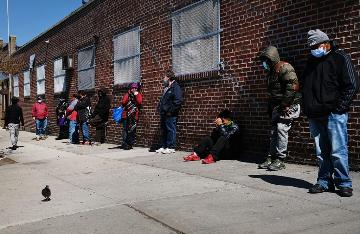
People wait in line to receive food at a food bank on April 28, 2020, in the
Brooklyn borough of New York City..
People wait in line to receive food at a food bank on April 28, 2020, in the
Brooklyn borough of New York City..
Percentage of households currently experiencing or expecting a loss of employment income due to the pandemic, by race
Lost employment income since March 13, 2020 Expect loss of employment income in the next four weeks
White--43% 27%
Hispanic or Latino--63% 50%
Black--54% 41%
41%
Asian --49% 39%
%
Chart: Center for American Progress Source: Author's calculations are based on data from the U.S. Census Bureau, "Household Pulse Survey: May 28 -
June 2," available at https://www.census.gov/householdpulsedata (last accessed June 2020).
Lost employment income since March 13, 2020 Expect loss of employment income in the next four weeks
White--43% 27%
Hispanic or Latino--63% 50%
Black--54% 41%
41%
Asian --49% 39%
%
Chart: Center for American Progress Source: Author's calculations are based on data from the U.S. Census Bureau, "Household Pulse Survey: May 28 -
June 2," available at https://www.census.gov/householdpulsedata (last accessed June 2020).
Heightened food insecurity
Food security in communities of color is not a new problem, but the current crisis has magnified it. People of color have faced substantial barriers to
accessing affordable, nutritious food for decades. For example, Black and Hispanic people are much more likely to reside in food deserts than their
white counterparts, even after controlling for factors such as poverty. And racial disparities in access to food appear to have only worsened in recent
weeks. According to the Census Bureau data, from May 28 to June 2, Black and Hispanic or Latino households were twice as likely as their white
counterparts to report that they sometimes or often do not have enough to eat. (see Figure 2) Among households with children, 21 percent of Hispanic or
Latino respondents and 27 percent of Black respondents reported that they are currently experiencing food insecurity. Access to healthy, affordable food
is a basic human right. No family should go hungry, especially during a public health crisis.
High rates of housing instability
Housing instability triggered by the coronavirus pandemic is a growing threat across the United States, especially in communities of color. While 9
percent of white homeowners with a mortgage missed or deferred their mortgage payment last month, a shocking 20 percent of Black homeowners did
so. (see Figure 3) People of color are also twice as likely to have slight or no confidence that they will be able to make next month’s payment. Renters
are in an even graver situation: 21 percent of white renters, 28 percent of Asian American renters, 45 percent of Hispanic or Latino renters, and 45
percent of Black renters have slight or no confidence that they will be able to pay next month’s rent. Racial disparities in housing instability are not the
product of individual behavior but of decades of housing discrimination and economic degradation. While recent federal, state, and local efforts to
establish temporary protections for homeowners and renters are admirable, the nation could experience an avalanche of foreclosures and evictions in
the coming weeks and months as these protections expire. These and other second-order consequences of reduced household financial stability could
slow the economic recovery and increase racial wealth inequality. Lawmakers must take immediate steps to extend protections, ensure continued
assistance, and create more equitable and sustainable housing measures.
Unequal access to mental health care services
Millions of Americans, especially people of color, are reporting signs of emotional distress associated with depression and anxiety in the wake of the
coronavirus. According to the Census Bureau data, from May 28 to June 2, 51 percent of white Americans, 62 percent of Black Americans, 59 percent of
Asian Americans, and 63 percent of Hispanic or Latino Americans were bothered by “not being able to stop or control worrying.” (see Figure 4) Millions
also reported “feeling down, depressed, or hopeless.” For people of color, increases in reported distress undoubtedly reflect the oppressive social
conditions that many of them endure. Further, people of color face substantial barriers to mental health services, including language access, stigma,
discrimination, lack of affordable high-quality health insurance, and cultural incompetence, as well as refusal to accept insurance among psychiatrists.
Lawmakers must ensure that all Americans, regardless of background, have full access to the mental health services they need. Robust and equitable
mental health services must be coupled with policies that guarantee access to housing, nutrition, health care, and coronavirus testing and treatment,
among other things.
Conclusion
Data demonstrate that the coronavirus is not the “great equalizer” that some politicians and pundits have purported it to be. On the contrary, inequality
has only worsened during the current national hardship. Without bold, prompt policy action, families of color will struggle to recover and be in an even
more precarious position when the next crisis arises.
Connor Maxwell is a senior policy analyst for Race and Ethnicity Policy at the Center for American Progress.
Food security in communities of color is not a new problem, but the current crisis has magnified it. People of color have faced substantial barriers to
accessing affordable, nutritious food for decades. For example, Black and Hispanic people are much more likely to reside in food deserts than their
white counterparts, even after controlling for factors such as poverty. And racial disparities in access to food appear to have only worsened in recent
weeks. According to the Census Bureau data, from May 28 to June 2, Black and Hispanic or Latino households were twice as likely as their white
counterparts to report that they sometimes or often do not have enough to eat. (see Figure 2) Among households with children, 21 percent of Hispanic or
Latino respondents and 27 percent of Black respondents reported that they are currently experiencing food insecurity. Access to healthy, affordable food
is a basic human right. No family should go hungry, especially during a public health crisis.
High rates of housing instability
Housing instability triggered by the coronavirus pandemic is a growing threat across the United States, especially in communities of color. While 9
percent of white homeowners with a mortgage missed or deferred their mortgage payment last month, a shocking 20 percent of Black homeowners did
so. (see Figure 3) People of color are also twice as likely to have slight or no confidence that they will be able to make next month’s payment. Renters
are in an even graver situation: 21 percent of white renters, 28 percent of Asian American renters, 45 percent of Hispanic or Latino renters, and 45
percent of Black renters have slight or no confidence that they will be able to pay next month’s rent. Racial disparities in housing instability are not the
product of individual behavior but of decades of housing discrimination and economic degradation. While recent federal, state, and local efforts to
establish temporary protections for homeowners and renters are admirable, the nation could experience an avalanche of foreclosures and evictions in
the coming weeks and months as these protections expire. These and other second-order consequences of reduced household financial stability could
slow the economic recovery and increase racial wealth inequality. Lawmakers must take immediate steps to extend protections, ensure continued
assistance, and create more equitable and sustainable housing measures.
Unequal access to mental health care services
Millions of Americans, especially people of color, are reporting signs of emotional distress associated with depression and anxiety in the wake of the
coronavirus. According to the Census Bureau data, from May 28 to June 2, 51 percent of white Americans, 62 percent of Black Americans, 59 percent of
Asian Americans, and 63 percent of Hispanic or Latino Americans were bothered by “not being able to stop or control worrying.” (see Figure 4) Millions
also reported “feeling down, depressed, or hopeless.” For people of color, increases in reported distress undoubtedly reflect the oppressive social
conditions that many of them endure. Further, people of color face substantial barriers to mental health services, including language access, stigma,
discrimination, lack of affordable high-quality health insurance, and cultural incompetence, as well as refusal to accept insurance among psychiatrists.
Lawmakers must ensure that all Americans, regardless of background, have full access to the mental health services they need. Robust and equitable
mental health services must be coupled with policies that guarantee access to housing, nutrition, health care, and coronavirus testing and treatment,
among other things.
Conclusion
Data demonstrate that the coronavirus is not the “great equalizer” that some politicians and pundits have purported it to be. On the contrary, inequality
has only worsened during the current national hardship. Without bold, prompt policy action, families of color will struggle to recover and be in an even
more precarious position when the next crisis arises.
Connor Maxwell is a senior policy analyst for Race and Ethnicity Policy at the Center for American Progress.