
New Zealand Travelogue
Nature at its Best
Nature at its Best

Part 4
By Susie R. Cuñada
Waitomo Caves
I was picked up for my coach tour to Auckland, where my tour officially ends. The drive wasn’t that scenic,
except for the Fitzgerald Glade, a rainforest. However, we passed along Lake Taupo, which is the largest
lake in NZ, as well as the Waikato River. This river, which is the longest in NZ, flows northwest from Lake
Taupo to enter the Tasman Sea south of Auckland. On its journey to the ocean, the river churns through
the turbines of eight dams, lighting much of the North Island.
En route to Waitomo Caves, we saw kiwi vines along the way. The kiwi fruits are harvested in May.
Apparently, kiwis used to be called “Chinese gooseberries.” NZ exported the fruits to other countries but
nobody was buying them. So, they changed the name to “Kiwi” and other countries bought and ordered
them like crazy. Funny how a name can change everything.
We then headed to the ever-famous Waitomo Glowworm Caves. We journeyed underground on a
subterranean adventure through limestone chambers and passages. The moment we entered this
wonderland, we discovered an ancient underground labyrinth, and marveled at the amazing limestone
formations created by Mother Nature. We were all suspended in awe and silence, surrounded by cave
decorations and a galaxy of tiny living lights. As we moved quietly beneath the lights of thousands of
glowworms, it was only the gentle sound of dripping water that reminded us that we were deep
underground and not beneath a star-filled sky. I only have one word to describe this experience: Magical!
As a backgrounder, the limestone in the Waitomo Glowworm Caves was formed about 30 million years
ago when Waitomo was beneath the sea. Limestone is a fossil rock made up of the hard remains of
countless millions of marine animals.
Most of these are broken up by wave action into sand-sized particles which gently settle on the seabed very
slowly and at great depth. In some areas of Waitomo, the limestone is over 200 meters thick. The layering i
By Susie R. Cuñada
Waitomo Caves
I was picked up for my coach tour to Auckland, where my tour officially ends. The drive wasn’t that scenic,
except for the Fitzgerald Glade, a rainforest. However, we passed along Lake Taupo, which is the largest
lake in NZ, as well as the Waikato River. This river, which is the longest in NZ, flows northwest from Lake
Taupo to enter the Tasman Sea south of Auckland. On its journey to the ocean, the river churns through
the turbines of eight dams, lighting much of the North Island.
En route to Waitomo Caves, we saw kiwi vines along the way. The kiwi fruits are harvested in May.
Apparently, kiwis used to be called “Chinese gooseberries.” NZ exported the fruits to other countries but
nobody was buying them. So, they changed the name to “Kiwi” and other countries bought and ordered
them like crazy. Funny how a name can change everything.
We then headed to the ever-famous Waitomo Glowworm Caves. We journeyed underground on a
subterranean adventure through limestone chambers and passages. The moment we entered this
wonderland, we discovered an ancient underground labyrinth, and marveled at the amazing limestone
formations created by Mother Nature. We were all suspended in awe and silence, surrounded by cave
decorations and a galaxy of tiny living lights. As we moved quietly beneath the lights of thousands of
glowworms, it was only the gentle sound of dripping water that reminded us that we were deep
underground and not beneath a star-filled sky. I only have one word to describe this experience: Magical!
As a backgrounder, the limestone in the Waitomo Glowworm Caves was formed about 30 million years
ago when Waitomo was beneath the sea. Limestone is a fossil rock made up of the hard remains of
countless millions of marine animals.
Most of these are broken up by wave action into sand-sized particles which gently settle on the seabed very
slowly and at great depth. In some areas of Waitomo, the limestone is over 200 meters thick. The layering i

| Glowworm |
n limestone comes after deposition and does not relate to tides or seasons. These layers involve the dissolving and reforming of
calcium carbonate in reaction with hard sand particles that do not dissolve in the seawater.
In the last 24 million years, Waitomo has been going through much geological activity in the form of both earth movements and
volcanic activity. Through this activity, much of the hard limestone has buckled and bent and lifted up out of the sea. With this, the
limestone then separated into huge blocks allowing the rainfall to flow down cracks and joints. On the way down, the rainwater mixes
with a small amount of carbon dioxide in the air forming a weak acid. The acid strengthens as more carbon dioxide is absorbed from
the soil. As it seeps through cracks in the rock, the acidic water dissolves the limestone and enlarges them. Eventually streams flow
through the enlarged cracks helping to create the caves as we see them today.
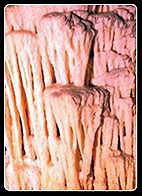
Once the caves are formed, stalactites, stalagmites and other cave decorations begin to grow. Water dripping from the cave roof or
flowing over cave walls leaves behind a deposit of limestone crystal. As time passes, these accumulate to form beautiful cave
decorations. Stalactites form down from the ceiling and stalagmites grow up from the cave floor. When they join together they are
called columns or pillars and where they spiral around they are called helictites. If there are other rock types above the limestone, they
will add minerals to the water and give color to the formations called iron oxide. The iron oxide comes mostly from volcanic ash.
The growth rates of cave formations vary considerably and can take hundreds of thousands of years to form. It has been estimated
that it takes about 100 years to form 1 cm3 of stalactite. The topography, vegetation, depth of limestone, outside and inside climate,
weather, and cave age, are all factors that affect the growth rates in a cave. Two stalactites hanging next to each other can have very
different growth rates depending on the route the water took to reach each stalactite.
They are very delicate and can be severely damaged simply by the touch of a human hand.
The Cathedral is a major cavern on the lower level of the cave and at 18 meters in height, it is the largest cavern in the cave. It is a
famous chamber known for its superb acoustics. Due to the enclosed shape and rough surface, many famous singers and choirs
have performed here and have been delighted with the purity of the sound.
Now that you know something about the caves, let me tell you about the “glowworms”.
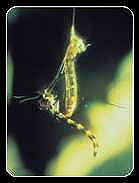
The New Zealand Glowworm is a two-winged insect at the ‘larva’ stage of its life-cycle. Its scientific name is ARACHNOCAMPA
LUMINOSA. ‘Arachno’ means spider-like because of the way glowworms catch flying insects. ‘Campa’ means larva and ‘luminosa’
light producing.
This glowworm is unique to New Zealand. It emits light to attract food in the form of other flying insects. It requires a select habitat to
survive. The glowworm must have humidity to prevent it from drying out, hanging surfaces for it to send down sticky feeding lines for an
adequate food supply of insects brought in on the river, a still atmosphere to prevent lines from tangling and darkness to allow it to
show its light.
The whole cycle of a glowworm takes about 11 months, after which it develops into a fly. However, the adult glowworm looks like a
large mosquito. It has no mouth and its only function is to reproduce and disperse the species. The fly lasts no longer than a few
days, then it dies. (I don’t think I want to be a glowworm in my next life, either.)
After that mystical tour, we had lunch, then continued on our way towards Auckland. As we drove nearer the city, one couldn’t help but
notice that farmlands have been turned into subdivisions and houses have started to sprout like mushrooms. You could sense that
you’re closer to the city.
Arrived in Auckland at 5 pm, and I was dropped off at my hotel, which is very close to the airport. You see, the city of Auckland is quite
far from the airport, so I requested a hotel that is very close to the airport, considering that my flight for Melbourne the following day was
at 6:30am. I had no more stamina and energy left to tour the “city of sails,” so I just checked in, had supper and went to get my beauty
sleep.
To recap, I had a taste of all what NZ had to offer. And all I can say is: what a taste!!!
So folks, this concludes my tour of New Zealand. Are you tired yet? I am…….so I hope you enjoyed reading my travelogue just as I
enjoyed reminiscing my Kiwi experiences all over again.
THE END
calcium carbonate in reaction with hard sand particles that do not dissolve in the seawater.
In the last 24 million years, Waitomo has been going through much geological activity in the form of both earth movements and
volcanic activity. Through this activity, much of the hard limestone has buckled and bent and lifted up out of the sea. With this, the
limestone then separated into huge blocks allowing the rainfall to flow down cracks and joints. On the way down, the rainwater mixes
with a small amount of carbon dioxide in the air forming a weak acid. The acid strengthens as more carbon dioxide is absorbed from
the soil. As it seeps through cracks in the rock, the acidic water dissolves the limestone and enlarges them. Eventually streams flow
through the enlarged cracks helping to create the caves as we see them today.
Once the caves are formed, stalactites, stalagmites and other cave decorations begin to grow. Water dripping from the cave roof or
flowing over cave walls leaves behind a deposit of limestone crystal. As time passes, these accumulate to form beautiful cave
decorations. Stalactites form down from the ceiling and stalagmites grow up from the cave floor. When they join together they are
called columns or pillars and where they spiral around they are called helictites. If there are other rock types above the limestone, they
will add minerals to the water and give color to the formations called iron oxide. The iron oxide comes mostly from volcanic ash.
The growth rates of cave formations vary considerably and can take hundreds of thousands of years to form. It has been estimated
that it takes about 100 years to form 1 cm3 of stalactite. The topography, vegetation, depth of limestone, outside and inside climate,
weather, and cave age, are all factors that affect the growth rates in a cave. Two stalactites hanging next to each other can have very
different growth rates depending on the route the water took to reach each stalactite.
They are very delicate and can be severely damaged simply by the touch of a human hand.
The Cathedral is a major cavern on the lower level of the cave and at 18 meters in height, it is the largest cavern in the cave. It is a
famous chamber known for its superb acoustics. Due to the enclosed shape and rough surface, many famous singers and choirs
have performed here and have been delighted with the purity of the sound.
Now that you know something about the caves, let me tell you about the “glowworms”.
The New Zealand Glowworm is a two-winged insect at the ‘larva’ stage of its life-cycle. Its scientific name is ARACHNOCAMPA
LUMINOSA. ‘Arachno’ means spider-like because of the way glowworms catch flying insects. ‘Campa’ means larva and ‘luminosa’
light producing.
This glowworm is unique to New Zealand. It emits light to attract food in the form of other flying insects. It requires a select habitat to
survive. The glowworm must have humidity to prevent it from drying out, hanging surfaces for it to send down sticky feeding lines for an
adequate food supply of insects brought in on the river, a still atmosphere to prevent lines from tangling and darkness to allow it to
show its light.
The whole cycle of a glowworm takes about 11 months, after which it develops into a fly. However, the adult glowworm looks like a
large mosquito. It has no mouth and its only function is to reproduce and disperse the species. The fly lasts no longer than a few
days, then it dies. (I don’t think I want to be a glowworm in my next life, either.)
After that mystical tour, we had lunch, then continued on our way towards Auckland. As we drove nearer the city, one couldn’t help but
notice that farmlands have been turned into subdivisions and houses have started to sprout like mushrooms. You could sense that
you’re closer to the city.
Arrived in Auckland at 5 pm, and I was dropped off at my hotel, which is very close to the airport. You see, the city of Auckland is quite
far from the airport, so I requested a hotel that is very close to the airport, considering that my flight for Melbourne the following day was
at 6:30am. I had no more stamina and energy left to tour the “city of sails,” so I just checked in, had supper and went to get my beauty
sleep.
To recap, I had a taste of all what NZ had to offer. And all I can say is: what a taste!!!
So folks, this concludes my tour of New Zealand. Are you tired yet? I am…….so I hope you enjoyed reading my travelogue just as I
enjoyed reminiscing my Kiwi experiences all over again.
THE END