


Hmong Townhall Meeting
Dissecting the Impact of Gov. Walker’s Budget
Repair Bill on the Hmong community
Dissecting the Impact of Gov. Walker’s Budget
Repair Bill on the Hmong community
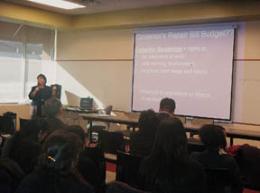



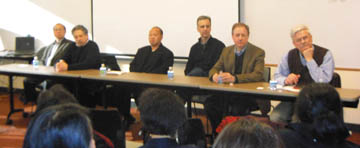
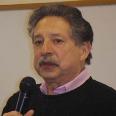



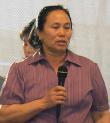
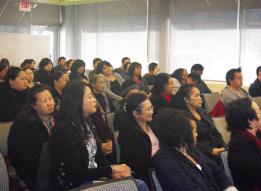
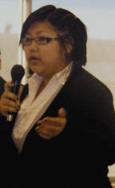
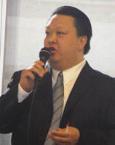


(Above, L-R) part of the huge audience at the Hmong townhall meeting, Mai Zong Vue presentation
| Shwaw Vang |
| Kabzuag Vaj |
| Cheng Vang |
| Peng Her |
By Heidi M. Pascual
The Hmong community in the Madison area gathered on March 27 at the Urban League building on
South Park Street to analyze the negative impact on the Hmong families of Wis. Gov. Scott Walker’s
Budget Repair Bill, express their thoughts on it to local officials in attendance, and to agree on the next
steps to collectively do afterward.
Spearheaded by prominent local Hmong adult and youth leaders, the town hall meeting noticeably
included many Hmong elders who don’t speak nor understand English, and Hmong youth who don’t
speak nor understand Hmong. Mai Zong Vue and Cheng Vang provided translations both ways.
On the panel facing the Hmong participants were local elected officials and some who are running for
office, as well as a respected Hmong elder: Chongjeh Vang; State Sen. Mark Miller, State Rep. Joe
Parisi (who’s running for Dane County Executive), Madison Mayor Dave Cieslewicz, Former Madison
Mayor Paul Soglin (who’s running for Madison Mayor again), and State Rep. Kelda Helen Roy. Anita
Weier, candidate for City Council in District 18 (and running against Peng Her) was in the audience.
The meeting started with a presentation by MaiZong Vue on the structure of the government and what
each branch does; the role of the state governor, highlighting his role in bill creation, bill signing/
approval and implementation; and funding distribution channels. Speaking exclusively in Hmong to
reach the elders, Mai Zong cited the case of Kajsiab House, whose funding would be affected should
the state decide to give less or nothing for its services through Dance County and the City of Madison.
She also explained the importance of collective bargaining, the heart of the ongoing rallies and
demonstrations at the State Capitol. As the world now knows, Gov. Walker’s Budget Repair Bill seeks to
gut the rights of workers, which has incurred the ire of hundreds of thousands of people in and out of the
state of Wisconsin. Mai Zong clarified that if the bill is approved, any company can reduce a worker’s
pay, increase or decrease working hours, make you do work you were not hired to do, and treat you
unfairly. She then proceeded to the provisions of the budget repair bill that directly impact the Hmong
community: On Health Care-to cut $500 in GPR from Medicaid and give authority to the DHS Secretary to
rewrite the law relating to BadgerCare and Medicaid, among others; On Education-university tuition
increase by 5.5 percent per year, potential loss of AOF grants for SEA students, and elimination of ESL
funding for K-12.
Shwaw Vang’s presentation – also in Hmong -- focused on the Budget Bill’s elimination of the state-only
Food-Share Program that provides benefits to legal immigrants who do not meet federal residency
requirements; reform of Wisconsin Works (W2) cash assistance program to put more responsibility on
participants to address failure to comply with program requirements, reduce monthly benefit checks by
$20, and limit the time a participant can remain in a trial job placement; and reform of BadgerCare
health insurance to increase premiums and deductibles, authorize the Dept. of Health Services (DHS) --
whose new Secretary is on record as a strong opponent of Medicaid/BadgerCare -- to pursue
approaches that constrain health care costs in the state’s Medicaid program, among other things. In the
area of education, Vang stressed that the bill will reduce school district revenue limits per pupil by 5.5
percent below the amounts authorized in FY 2010-11; phase out family-income requirements as a
condition of eligibility for the Milwaukee Parental Choice Program; and authorize all four-year UW
campuses to sponsor independent charter schools and allow charter schools to be created anywhere
The Hmong community in the Madison area gathered on March 27 at the Urban League building on
South Park Street to analyze the negative impact on the Hmong families of Wis. Gov. Scott Walker’s
Budget Repair Bill, express their thoughts on it to local officials in attendance, and to agree on the next
steps to collectively do afterward.
Spearheaded by prominent local Hmong adult and youth leaders, the town hall meeting noticeably
included many Hmong elders who don’t speak nor understand English, and Hmong youth who don’t
speak nor understand Hmong. Mai Zong Vue and Cheng Vang provided translations both ways.
On the panel facing the Hmong participants were local elected officials and some who are running for
office, as well as a respected Hmong elder: Chongjeh Vang; State Sen. Mark Miller, State Rep. Joe
Parisi (who’s running for Dane County Executive), Madison Mayor Dave Cieslewicz, Former Madison
Mayor Paul Soglin (who’s running for Madison Mayor again), and State Rep. Kelda Helen Roy. Anita
Weier, candidate for City Council in District 18 (and running against Peng Her) was in the audience.
The meeting started with a presentation by MaiZong Vue on the structure of the government and what
each branch does; the role of the state governor, highlighting his role in bill creation, bill signing/
approval and implementation; and funding distribution channels. Speaking exclusively in Hmong to
reach the elders, Mai Zong cited the case of Kajsiab House, whose funding would be affected should
the state decide to give less or nothing for its services through Dance County and the City of Madison.
She also explained the importance of collective bargaining, the heart of the ongoing rallies and
demonstrations at the State Capitol. As the world now knows, Gov. Walker’s Budget Repair Bill seeks to
gut the rights of workers, which has incurred the ire of hundreds of thousands of people in and out of the
state of Wisconsin. Mai Zong clarified that if the bill is approved, any company can reduce a worker’s
pay, increase or decrease working hours, make you do work you were not hired to do, and treat you
unfairly. She then proceeded to the provisions of the budget repair bill that directly impact the Hmong
community: On Health Care-to cut $500 in GPR from Medicaid and give authority to the DHS Secretary to
rewrite the law relating to BadgerCare and Medicaid, among others; On Education-university tuition
increase by 5.5 percent per year, potential loss of AOF grants for SEA students, and elimination of ESL
funding for K-12.
Shwaw Vang’s presentation – also in Hmong -- focused on the Budget Bill’s elimination of the state-only
Food-Share Program that provides benefits to legal immigrants who do not meet federal residency
requirements; reform of Wisconsin Works (W2) cash assistance program to put more responsibility on
participants to address failure to comply with program requirements, reduce monthly benefit checks by
$20, and limit the time a participant can remain in a trial job placement; and reform of BadgerCare
health insurance to increase premiums and deductibles, authorize the Dept. of Health Services (DHS) --
whose new Secretary is on record as a strong opponent of Medicaid/BadgerCare -- to pursue
approaches that constrain health care costs in the state’s Medicaid program, among other things. In the
area of education, Vang stressed that the bill will reduce school district revenue limits per pupil by 5.5
percent below the amounts authorized in FY 2010-11; phase out family-income requirements as a
condition of eligibility for the Milwaukee Parental Choice Program; and authorize all four-year UW
campuses to sponsor independent charter schools and allow charter schools to be created anywhere
has changed, and a lot of manufacturing many of which were in Wisconsin have left the state, as in other states. We need to
be able to invest in the new economy, the high technology --- that is going to be the economy of the future.”
All the members of the panel were in one voice – in opposition to Gov. Walker’s budget repair bill – and all expressed
concern about its impact on the Hmong community, as well as other communities at large. They listened intently to every
question and comments, and answered in parallel to their actions as current elected government officials. Former Madison
Mayor Paul Soglin, for his part, informed the Hmong community of his record as former Madison Mayor, including his
noteworthy initiatives for community services. The panel then urged the Hmong community to vote on April 5 for the right
candidates, particularly for the Supreme Court, because it would spell the doom or victory for Gov. Walker’s budget bill.
When the guests and panelists left the room, the Hmong community—now enlightened with the issues at hand -- discussed
the next steps that they were going to do. They decided to continue participating in the ongoing rallies and demonstrations at
the State Capitol, encourage other people to go to the Capitol as well, cast their votes on April 5, and educate the elders
about the Recall Movement that is spreading like wildfire.
The lead adult organizers of this Hmong townhall meeting are: Freedom Inc, led by Kabzuag Vag, Maizong Vue & Peng
Her, Cheng Vang, Manivan Vang, Shwaw & Mee Vang, Lo Pao Vang, and Cristina Lor. The lead youth organizers did
wonders in stepping up to the plate to move their community to action: they knocked on doors, kept on educating themselves
with the issues, and stayed involved in the rallies at the State Capitol. They had been doing their own townhall meetings all
be able to invest in the new economy, the high technology --- that is going to be the economy of the future.”
All the members of the panel were in one voice – in opposition to Gov. Walker’s budget repair bill – and all expressed
concern about its impact on the Hmong community, as well as other communities at large. They listened intently to every
question and comments, and answered in parallel to their actions as current elected government officials. Former Madison
Mayor Paul Soglin, for his part, informed the Hmong community of his record as former Madison Mayor, including his
noteworthy initiatives for community services. The panel then urged the Hmong community to vote on April 5 for the right
candidates, particularly for the Supreme Court, because it would spell the doom or victory for Gov. Walker’s budget bill.
When the guests and panelists left the room, the Hmong community—now enlightened with the issues at hand -- discussed
the next steps that they were going to do. They decided to continue participating in the ongoing rallies and demonstrations at
the State Capitol, encourage other people to go to the Capitol as well, cast their votes on April 5, and educate the elders
about the Recall Movement that is spreading like wildfire.
The lead adult organizers of this Hmong townhall meeting are: Freedom Inc, led by Kabzuag Vag, Maizong Vue & Peng
Her, Cheng Vang, Manivan Vang, Shwaw & Mee Vang, Lo Pao Vang, and Cristina Lor. The lead youth organizers did
wonders in stepping up to the plate to move their community to action: they knocked on doors, kept on educating themselves
with the issues, and stayed involved in the rallies at the State Capitol. They had been doing their own townhall meetings all
in the state.
At this point, Cristina Lor, a Hmong
UW student stood up and spoke to
the crowd, “Education, in my
opinion, opens a lot of doorways for
our community, and it definitely has
done that for me,” she said. “That’s
why I’m here… that’s why I’m
running for the student council at
UW-Madison, and that’s why I’m out
At this point, Cristina Lor, a Hmong
UW student stood up and spoke to
the crowd, “Education, in my
opinion, opens a lot of doorways for
our community, and it definitely has
done that for me,” she said. “That’s
why I’m here… that’s why I’m
running for the student council at
UW-Madison, and that’s why I’m out
| UW student leader Cristina Lor |
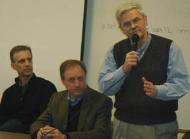
(L_R) Madison Mayor Dave Cieslewicz, Former Madison Mayor
Paul Soglin, State Rep. Kelda Helen Roy
Paul Soglin, State Rep. Kelda Helen Roy
there at the Capitol every day organizing
students like the student action coalition, and
I just hope that your children and more
students are out there.”
Shwaw Vang then informed the body that a
state Assembly member from Hartford wants
to introduce a bill that would require law
enforcement to check on whether someone
who’s arrested or charged with a crime is an
students like the student action coalition, and
I just hope that your children and more
students are out there.”
Shwaw Vang then informed the body that a
state Assembly member from Hartford wants
to introduce a bill that would require law
enforcement to check on whether someone
who’s arrested or charged with a crime is an
| State Rep. Joe Parisi |
illegal immigrant based on “reasonable suspicion.” Unlike the Arizona
law however, the Wisconsin proposal would require the person/s
concerned to present their legal documents in 48 hours. Those who
failed to present such documents within this period would be turned
over to immigration authorities.
Panel Q&A
At the outset, Mai Zong clarified that the town hall meeting at hand was
a listening session and not a venue for campaign purposes. The
attendees were to ask questions or express comments for the elected
government officials to hear and hopefully, to bring to the attention of
Governor Walker their concerns.
law however, the Wisconsin proposal would require the person/s
concerned to present their legal documents in 48 hours. Those who
failed to present such documents within this period would be turned
over to immigration authorities.
Panel Q&A
At the outset, Mai Zong clarified that the town hall meeting at hand was
a listening session and not a venue for campaign purposes. The
attendees were to ask questions or express comments for the elected
government officials to hear and hopefully, to bring to the attention of
Governor Walker their concerns.
| Hmong Elder Chongjeh Vang |
Two women express their concerns
about losing benefits for food-share and
education of the children
about losing benefits for food-share and
education of the children
State Sen. Mark Miller explains why
the "Wisconsin 14" left the city during
the budget repair bill deliberations.
the "Wisconsin 14" left the city during
the budget repair bill deliberations.
The questions raised focused on the Hmong community’s concerns for benefits that would
be curtailed should the budget bill be approved. They focused on education, health care, W-
2. and food-stamp programs that directly affect them. One stressed his concern about the
elimination of the ESL program and corresponding staff positions that serve as a bridge
between the school and the parents who are non-English speakers. A number of elderly
women spoke, almost in tears, about how elimination of important benefits such as food
stamps and their children’s education meant their sudden death. An elder even asked
whether the new governor of Wisconsin actually wants the Hmong to get out of the state of
Wisconsin. A number of youth and students talked about how the bill would negatively
impact their studies, for they had relied on public-school level tuition and grants –now
proposed to be reformed -- in order to go to school.
be curtailed should the budget bill be approved. They focused on education, health care, W-
2. and food-stamp programs that directly affect them. One stressed his concern about the
elimination of the ESL program and corresponding staff positions that serve as a bridge
between the school and the parents who are non-English speakers. A number of elderly
women spoke, almost in tears, about how elimination of important benefits such as food
stamps and their children’s education meant their sudden death. An elder even asked
whether the new governor of Wisconsin actually wants the Hmong to get out of the state of
Wisconsin. A number of youth and students talked about how the bill would negatively
impact their studies, for they had relied on public-school level tuition and grants –now
proposed to be reformed -- in order to go to school.
State Sen. Mark Miller had the most floor among the panelists since the topic
of the day was Gov. Walker’s Budget Repair Bill, and Miller is an active
Democratic State Senator in the thick of this issue. Miller was among the
Wisconsin 14 Democratic State Senators who left the state while the State
Republicans were considering Walker’s bill, in order to prevent its immediate
approval. Rallies and demonstrations at the Capitol started while they were
away. Miller informed his audience that Gov. Walker won’t listen to anyone
opposed to his budget repair bill; thus the importance of numbers of people
and voters expressing their opposition and disappointment to it.
When asked how Wisconsin can get back businesses that left it, Miller said,
“One of the ways to attract businesses here is to make sure that you have a
top quality higher education system, as well as elementary, K12 educational
school systems. … Second thing, is to recognize that the world economy
of the day was Gov. Walker’s Budget Repair Bill, and Miller is an active
Democratic State Senator in the thick of this issue. Miller was among the
Wisconsin 14 Democratic State Senators who left the state while the State
Republicans were considering Walker’s bill, in order to prevent its immediate
approval. Rallies and demonstrations at the Capitol started while they were
away. Miller informed his audience that Gov. Walker won’t listen to anyone
opposed to his budget repair bill; thus the importance of numbers of people
and voters expressing their opposition and disappointment to it.
When asked how Wisconsin can get back businesses that left it, Miller said,
“One of the ways to attract businesses here is to make sure that you have a
top quality higher education system, as well as elementary, K12 educational
school systems. … Second thing, is to recognize that the world economy
Hmong youth leaders and team members who made
this townhall meeting possible.
this townhall meeting possible.


| www.ghc-hmo.com (608) 251-4156 • (800) 605-4327 • TTY (608) 828-4815 |
over Madison for the Hmong and
African American communities.
These youth from Freedom Inc.,
particularly Meng Vang and True
Thao and their team, are the unsung
heroes in the Hmong community.
They led a group of Hmong youth
and elders from Bayview
Community who have been part of
the rally at the Capitol since day one.
Meng and his youth team slept at the
Capitol for days just like others. They
are the emerging leaders in our
community who will not sit and watch
their future go down the drain as they
understood fully how the budget bill
will impact their education in
Wisconsin. Though they did not do
the presenttations at this townhall
meeting, it wouldn't have happened
without them.
African American communities.
These youth from Freedom Inc.,
particularly Meng Vang and True
Thao and their team, are the unsung
heroes in the Hmong community.
They led a group of Hmong youth
and elders from Bayview
Community who have been part of
the rally at the Capitol since day one.
Meng and his youth team slept at the
Capitol for days just like others. They
are the emerging leaders in our
community who will not sit and watch
their future go down the drain as they
understood fully how the budget bill
will impact their education in
Wisconsin. Though they did not do
the presenttations at this townhall
meeting, it wouldn't have happened
without them.