

Debby Tewes’ column
Life's AHA Moment
Life's AHA Moment
By Debby Tewes
This past semester at UWM I took a class at UWM as part of my
ongoing mission to finally graduate. I like to joke that there is no sense
in rushing into these things and this “mission” started back in 1969.
The course is part of the Women’s Studies Department at UWM and isn’t
part of my major but is offered online and fits nicely with my schedule.
The class had a profound effect on me and I’d recommend it to anyone
who needs an opportunity to reflect on their life. The readings for the
class took us on a journey through our lives to becoming mindful
travelers and really seeing the world around us. The class led us on
the journey that is our life and helped us see the transitions we all
make as our lives unfold. Each of us has a story to tell and we were
able to read of other women’s journeys and awakenings in a book
called “A Woman’s Path” edited by Lucy McCauley, Amy Carlson and
Jennifer Leo, 2003 Traveler’s Tales, San Francisco. Once I had the
book, late last summer, I packed it for my latest trip to Belarus and
This past semester at UWM I took a class at UWM as part of my
ongoing mission to finally graduate. I like to joke that there is no sense
in rushing into these things and this “mission” started back in 1969.
The course is part of the Women’s Studies Department at UWM and isn’t
part of my major but is offered online and fits nicely with my schedule.
The class had a profound effect on me and I’d recommend it to anyone
who needs an opportunity to reflect on their life. The readings for the
class took us on a journey through our lives to becoming mindful
travelers and really seeing the world around us. The class led us on
the journey that is our life and helped us see the transitions we all
make as our lives unfold. Each of us has a story to tell and we were
able to read of other women’s journeys and awakenings in a book
called “A Woman’s Path” edited by Lucy McCauley, Amy Carlson and
Jennifer Leo, 2003 Traveler’s Tales, San Francisco. Once I had the
book, late last summer, I packed it for my latest trip to Belarus and


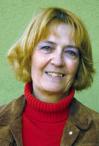
Debby Tewes
Russia. I finished it before I returned home. Some classes
just have profound meanings for you and can be transitions
themselves. It certainly helped me see points in my life that
were the proverbial forks in the road.
Back in 1988 I answered an ad in the paper for a parts
person at a northwest side tractor distribution plant. I was
between “careers” as the euphemism currently goes and
needed to find something quickly. While I knew little about
tractor parts, I had an industrial background and figured
“parts is parts” and I was also vaguely aware that the place I
was applying had been in the news as the site of a defection
by a Russian national and I thought that sounded like it might
be an interesting place to work. It was also about to change
the focus of my life in ways that I couldn’t even begin to think
about in the first year as within the first two weeks I was
fired for not knowing enough about tractor parts!
Coincidentally, the same day I got fired, they also fired the
receptionist and since they now needed a receptionist maybe
I’d like that job? Now, I knew less about being a receptionist
than tractor parts but desperation makes for strange choices
so in between snuffles, I took the job. At this point I might
insert that we had a rather odd individual managing the
Milwaukee plant. To say that he was mercurial would be a
huge understatement. I came to enjoy working for the Russian
owners of the company and learned that all the myths of my
youth about the Soviet Union and any preconceived notions
were groundless.
There you have the back story of how I came to make the
first trip to Belarus and discovered a place not unlike the
setting of one of the stories in A Woman’s Path, “Mother To
the World” by Cherilyn Parsons. In this story, the author
travels to Calcutta to seek out the work of Mother Teresa, the
Mother Superior to the Sisters of Charity, renowned in India
for their work with the Untouchables and worst of the
downtrodden, a concept somewhat alien to westerners but
then again, perhaps not with our own treatment of those we
just have profound meanings for you and can be transitions
themselves. It certainly helped me see points in my life that
were the proverbial forks in the road.
Back in 1988 I answered an ad in the paper for a parts
person at a northwest side tractor distribution plant. I was
between “careers” as the euphemism currently goes and
needed to find something quickly. While I knew little about
tractor parts, I had an industrial background and figured
“parts is parts” and I was also vaguely aware that the place I
was applying had been in the news as the site of a defection
by a Russian national and I thought that sounded like it might
be an interesting place to work. It was also about to change
the focus of my life in ways that I couldn’t even begin to think
about in the first year as within the first two weeks I was
fired for not knowing enough about tractor parts!
Coincidentally, the same day I got fired, they also fired the
receptionist and since they now needed a receptionist maybe
I’d like that job? Now, I knew less about being a receptionist
than tractor parts but desperation makes for strange choices
so in between snuffles, I took the job. At this point I might
insert that we had a rather odd individual managing the
Milwaukee plant. To say that he was mercurial would be a
huge understatement. I came to enjoy working for the Russian
owners of the company and learned that all the myths of my
youth about the Soviet Union and any preconceived notions
were groundless.
There you have the back story of how I came to make the
first trip to Belarus and discovered a place not unlike the
setting of one of the stories in A Woman’s Path, “Mother To
the World” by Cherilyn Parsons. In this story, the author
travels to Calcutta to seek out the work of Mother Teresa, the
Mother Superior to the Sisters of Charity, renowned in India
for their work with the Untouchables and worst of the
downtrodden, a concept somewhat alien to westerners but
then again, perhaps not with our own treatment of those we
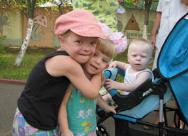
| Brother and Sister removed from home substance abusing parents |
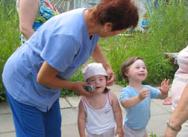
| Dr. Irina and her little charges |
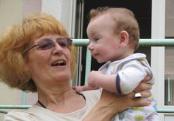
My new young friend with the big
smile
smile
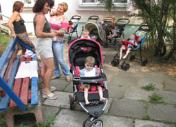
The group "mothers" and their
charges
charges
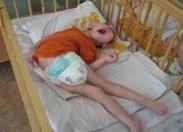
| Severe Cerebral Palsy in hospice care |
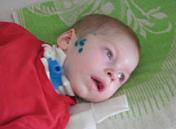
Another charge in hospice care with
breathing tube
breathing tube
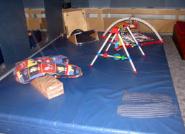
| The therapy equipment that they fought long and hard to obtain. Embassy wives and friends around the world donated. |
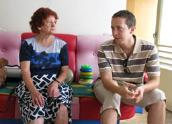
Alla and Andrei. Alla was the
interpreter who took us to the
orphanage the first time and Andrei
is an entrepreneur and has helped
procure needed computers to help
the children learn. Has become
quite attached to the staff and
children, a true Renaissance man
in Belarus.
interpreter who took us to the
orphanage the first time and Andrei
is an entrepreneur and has helped
procure needed computers to help
the children learn. Has become
quite attached to the staff and
children, a true Renaissance man
in Belarus.
like here.”
I assured them I could see “here” anytime and I wanted to see where they came from, no matter what. I did pack extra toilet paper
just in case. I’d heard those rumors.
As part of our “mission” we traveled to a number of oncology hospitals, orphanages and recuperation spas and I always had the
vague sense we were being shown the places that were the best available and not necessarily the neediest. Leukemia and thyroid
cancer rates were increasing and people saw the Chernobyl bogeyman in every sniffle their child developed. The pediatric oncology
hospitals were heart rending as these were very sick children with very worried parents. They also were very grim places at the time.
We did our distributions, visited historical sites, were entertained by folklore groups and generally had an interesting visit. There were
cultural differences and I was vaguely uncomfortable with the pastor who ran the mission trip. My impression was that he was a bit too
slick but he seemed to be doing good things for the people who needed it and so many people did. He also seemed to pay more attention
to those volunteers who were well connected or seemed to have connections to money. Everyone seemed to have agendas. The man
leading the mission seemed a bit too full of himself although there was no denying his charismatic personality. He just had a strange vibe
that I couldn’t get past and the endless photo opportunities really started to bother me especially at the oncology hospital where the
children were so sick and the parents in such anguish, I just felt we were being intrusive.
One of our translators one day asked a group of us if we’d like to visit an orphanage that wasn’t on the list of “official” visits but that
she thought we’d find interesting. That visit took us to Baby Home No. 1 and in this place with the inglorious name, we found a band of
ladies, who to this day, would rival the sisters in the service of Mother Teresa. In Dr. Tamara’s (the director) charge were a group of
children ages birth to about 7, including one little boy, Igor, who was the first certified Chernobyl child. Igor was born a few years after
Chernobyl exploded and in some ways he reminded me of the Thalidomide babies of the early 60s. His legs were stunted and one arm
was missing but he was a beautiful child and what he lacked in physical appearance was compensated in charm and strength. He was
also very clever and mischievous. I ended up on the floor with Igor grabbing my camera and snapping pictures as I was buried under a
happy tumble of children. Many of the other children were and are probably victims of fetal alcohol syndrome or just poor pre-natal care.
Down syndrome comprised 50% of the children’s issues with more severe birth defects scattered throughout. Each of these children had
been born at maternity hospitals and abandoned by their mothers. Belarus at that time had no social infrastructure to help parents with
special needs children and to some degree still doesn’t. Where we had seen smiling bureaucrats in the other institutions for whom their
positions were clearly “jobs,” we were now seeing a place very like Shishu Bhavan. These caregivers answered a higher calling
because it certainly wasn’t the pay that drew them.
The staff made do with what they had and in some cases, Dr. Tamara told us that the only thing she could do was to make sure the
children were comfortable until they passed. We saw things that frankly were shocking in the extent of the birth defect and others, such
as the children with Down syndrome or simple cleft palates that had been abandoned that elsewhere would have remained with their
families. We were invited to participate in the baptism of several children as this was something Dr. Tamara insisted on, that each child
was baptized in the Orthodox faith. Otyets (Father) Anatoli visited regularly to perform the sacrament for the children. One child was
picked up by a nurse and he screamed in pain. It was then we saw the bulge of the baby’s spine, an extreme case of spina bifida. She
lifted him tenderly so the priest could pour the holy water and clip a lock of his hair. We stood by holding our beeswax tapers, witnessing
this act of kindness for a little boy who would only live a short time longer. But during his short life he knew love and kindness, no small
blessing.
As we left that day, I and the others with me on that visit knew we had found the reason for our trip. The orphanage became our sole
topic of conversation and several of us became close friends in the years since. We have helped the orphanage over the years with
friendship, donations and raising awareness within Belarus of the work they do there. The home has been able to move to a larger and
better insulated facility that now benefits from attention from the government. I have remained friends with the staff and have involved
several young people in Belarus in active projects to improve the home. One young man, Andrei, is a bit of a computer whiz and took it
upon himself to consult with a group of specialists to determine what computer adaptations were necessary to engage the Down
syndrome children in interactive learning. Men in Belarus don’t normally pay attention to these sorts of places as it is considered the
purview of women. Not only does Andrei help her with her “tech” needs but another acquaintance of mine got his business owner to take
New Year’s treats to the children each year. When I worked at Belarus Tractor the techs would argue with each other over who got to
take the cash donations to the home on their various return trips. A cultural break through!
On this most recent trip, my young friend Andrei and I visited and discussed the upcoming expansion of her hospice palliative care
unit. It was very hot while I was there and the windows were open with no screens. The electricity was out as part of a planned
maintenance for the neighborhood. We are thinking about backup generators for the building, especially for children that need life support
equipment. The building they are in is a former school and the neighbors had originally objected to having “those kind of children” in
their midst. Early in the move to the new location we had suggested the staff have an open house and tea and invite the neighbors to the
party. Now the neighbors pitch in and help out sometimes. I suspect a few of them may work there as “group mothers.”
This is the place where I feel most like I have done something that has a lasting meaning. The friendship of the women who work
there and the genuine joy every time we meet is something I can’t describe. Above are some pictures of the children who reside there.
One little red haired fellow is in isolation as his mother was HIV positive. So far, he is well and healthy exhibiting no signs of the virus.
The delightful children reaching for hugs show the happiness these children experience here. As I said above even the children who
cannot survive, know they are loved by the touch of their caregivers. Together we have worked with people from many places to provide
a place for these children to feel cherished and wanted. Being around children who have special needs is another place that makes me
feel “in my skin” and also brings out my “warrior” side, especially when they need special care. Seeing these children made me
understand the emotions that Cherilyn Parsons felt. No matter how insurmountable your life’s issues seem, there are always others that
can put those problems in perspective and take you out of yourself. The staff at Baby Home Number 1 and Shishu Bhavan exemplify the
quote from Aung San Suu Kyi about women “regaining control of their primary historical role of sustaining life in the context of home and
family”, no matter what the home or how you define family.
I assured them I could see “here” anytime and I wanted to see where they came from, no matter what. I did pack extra toilet paper
just in case. I’d heard those rumors.
As part of our “mission” we traveled to a number of oncology hospitals, orphanages and recuperation spas and I always had the
vague sense we were being shown the places that were the best available and not necessarily the neediest. Leukemia and thyroid
cancer rates were increasing and people saw the Chernobyl bogeyman in every sniffle their child developed. The pediatric oncology
hospitals were heart rending as these were very sick children with very worried parents. They also were very grim places at the time.
We did our distributions, visited historical sites, were entertained by folklore groups and generally had an interesting visit. There were
cultural differences and I was vaguely uncomfortable with the pastor who ran the mission trip. My impression was that he was a bit too
slick but he seemed to be doing good things for the people who needed it and so many people did. He also seemed to pay more attention
to those volunteers who were well connected or seemed to have connections to money. Everyone seemed to have agendas. The man
leading the mission seemed a bit too full of himself although there was no denying his charismatic personality. He just had a strange vibe
that I couldn’t get past and the endless photo opportunities really started to bother me especially at the oncology hospital where the
children were so sick and the parents in such anguish, I just felt we were being intrusive.
One of our translators one day asked a group of us if we’d like to visit an orphanage that wasn’t on the list of “official” visits but that
she thought we’d find interesting. That visit took us to Baby Home No. 1 and in this place with the inglorious name, we found a band of
ladies, who to this day, would rival the sisters in the service of Mother Teresa. In Dr. Tamara’s (the director) charge were a group of
children ages birth to about 7, including one little boy, Igor, who was the first certified Chernobyl child. Igor was born a few years after
Chernobyl exploded and in some ways he reminded me of the Thalidomide babies of the early 60s. His legs were stunted and one arm
was missing but he was a beautiful child and what he lacked in physical appearance was compensated in charm and strength. He was
also very clever and mischievous. I ended up on the floor with Igor grabbing my camera and snapping pictures as I was buried under a
happy tumble of children. Many of the other children were and are probably victims of fetal alcohol syndrome or just poor pre-natal care.
Down syndrome comprised 50% of the children’s issues with more severe birth defects scattered throughout. Each of these children had
been born at maternity hospitals and abandoned by their mothers. Belarus at that time had no social infrastructure to help parents with
special needs children and to some degree still doesn’t. Where we had seen smiling bureaucrats in the other institutions for whom their
positions were clearly “jobs,” we were now seeing a place very like Shishu Bhavan. These caregivers answered a higher calling
because it certainly wasn’t the pay that drew them.
The staff made do with what they had and in some cases, Dr. Tamara told us that the only thing she could do was to make sure the
children were comfortable until they passed. We saw things that frankly were shocking in the extent of the birth defect and others, such
as the children with Down syndrome or simple cleft palates that had been abandoned that elsewhere would have remained with their
families. We were invited to participate in the baptism of several children as this was something Dr. Tamara insisted on, that each child
was baptized in the Orthodox faith. Otyets (Father) Anatoli visited regularly to perform the sacrament for the children. One child was
picked up by a nurse and he screamed in pain. It was then we saw the bulge of the baby’s spine, an extreme case of spina bifida. She
lifted him tenderly so the priest could pour the holy water and clip a lock of his hair. We stood by holding our beeswax tapers, witnessing
this act of kindness for a little boy who would only live a short time longer. But during his short life he knew love and kindness, no small
blessing.
As we left that day, I and the others with me on that visit knew we had found the reason for our trip. The orphanage became our sole
topic of conversation and several of us became close friends in the years since. We have helped the orphanage over the years with
friendship, donations and raising awareness within Belarus of the work they do there. The home has been able to move to a larger and
better insulated facility that now benefits from attention from the government. I have remained friends with the staff and have involved
several young people in Belarus in active projects to improve the home. One young man, Andrei, is a bit of a computer whiz and took it
upon himself to consult with a group of specialists to determine what computer adaptations were necessary to engage the Down
syndrome children in interactive learning. Men in Belarus don’t normally pay attention to these sorts of places as it is considered the
purview of women. Not only does Andrei help her with her “tech” needs but another acquaintance of mine got his business owner to take
New Year’s treats to the children each year. When I worked at Belarus Tractor the techs would argue with each other over who got to
take the cash donations to the home on their various return trips. A cultural break through!
On this most recent trip, my young friend Andrei and I visited and discussed the upcoming expansion of her hospice palliative care
unit. It was very hot while I was there and the windows were open with no screens. The electricity was out as part of a planned
maintenance for the neighborhood. We are thinking about backup generators for the building, especially for children that need life support
equipment. The building they are in is a former school and the neighbors had originally objected to having “those kind of children” in
their midst. Early in the move to the new location we had suggested the staff have an open house and tea and invite the neighbors to the
party. Now the neighbors pitch in and help out sometimes. I suspect a few of them may work there as “group mothers.”
This is the place where I feel most like I have done something that has a lasting meaning. The friendship of the women who work
there and the genuine joy every time we meet is something I can’t describe. Above are some pictures of the children who reside there.
One little red haired fellow is in isolation as his mother was HIV positive. So far, he is well and healthy exhibiting no signs of the virus.
The delightful children reaching for hugs show the happiness these children experience here. As I said above even the children who
cannot survive, know they are loved by the touch of their caregivers. Together we have worked with people from many places to provide
a place for these children to feel cherished and wanted. Being around children who have special needs is another place that makes me
feel “in my skin” and also brings out my “warrior” side, especially when they need special care. Seeing these children made me
understand the emotions that Cherilyn Parsons felt. No matter how insurmountable your life’s issues seem, there are always others that
can put those problems in perspective and take you out of yourself. The staff at Baby Home Number 1 and Shishu Bhavan exemplify the
quote from Aung San Suu Kyi about women “regaining control of their primary historical role of sustaining life in the context of home and
family”, no matter what the home or how you define family.
view as “different.” She ends up working at an orphanage, Shishu Bhavan, for sick, dying and
disabled children. Cherilyn read a passage by Mother Teresa that said “Being unwanted is the most
terrible disease that human beings can experience.” If you think about this, this truly is what all
humans strive for, to be accepted and wanted. Imagine the sadness of a child who is given away
before even knowing love and facing the prospect of dying alone and unwanted. A baby whose cry is
never answered by a mother’s loving touch or an infant so sick it is hidden away from others until
death comes. These are the children that come to Shishu Bhavan. These are also the children who
come to Baby Home Number One in Minsk, Belarus.
In 1993, my nemesis had long since departed Belarus Machinery and the Russians had moved to
Milwaukee to oversee the company after hiring a new manager. Through my association with the
technicians from Belarus and taking them on outings on the weekends (these had to be arranged with
the State Department in those days and always had to be accompanied by an American) I learned a lot
about their lives in Belarus and Russia and grew fond of some of the families. It was always sad
when their terms were up and they had to return home. I was always envious when service schools
were set up at the factory in Minsk, Belarus because I desperately wanted to go but there was no
particular reason to send the receptionist to Belarus. Opportunity knocked at my desk in 1993. A
group that sent volunteers to Belarus to help distribute humanitarian aid to institutions dealing with
the after effects of Chernobyl (most of the radiation fell on Belarus) asked if Belarus Machinery wanted
to send a volunteer. Indeed they did and they had just the person (as well as a tax write off). Me!
So a month or so later, I was off, passport in hand with a visa to Belarus. My technicians had
hovered about me in concern, fearing I’d be disappointed or not like their country “because it wasn’t
disabled children. Cherilyn read a passage by Mother Teresa that said “Being unwanted is the most
terrible disease that human beings can experience.” If you think about this, this truly is what all
humans strive for, to be accepted and wanted. Imagine the sadness of a child who is given away
before even knowing love and facing the prospect of dying alone and unwanted. A baby whose cry is
never answered by a mother’s loving touch or an infant so sick it is hidden away from others until
death comes. These are the children that come to Shishu Bhavan. These are also the children who
come to Baby Home Number One in Minsk, Belarus.
In 1993, my nemesis had long since departed Belarus Machinery and the Russians had moved to
Milwaukee to oversee the company after hiring a new manager. Through my association with the
technicians from Belarus and taking them on outings on the weekends (these had to be arranged with
the State Department in those days and always had to be accompanied by an American) I learned a lot
about their lives in Belarus and Russia and grew fond of some of the families. It was always sad
when their terms were up and they had to return home. I was always envious when service schools
were set up at the factory in Minsk, Belarus because I desperately wanted to go but there was no
particular reason to send the receptionist to Belarus. Opportunity knocked at my desk in 1993. A
group that sent volunteers to Belarus to help distribute humanitarian aid to institutions dealing with
the after effects of Chernobyl (most of the radiation fell on Belarus) asked if Belarus Machinery wanted
to send a volunteer. Indeed they did and they had just the person (as well as a tax write off). Me!
So a month or so later, I was off, passport in hand with a visa to Belarus. My technicians had
hovered about me in concern, fearing I’d be disappointed or not like their country “because it wasn’t
| This is the place where I feel most like I have done something that has a lasting meaning. |