| Running a one-woman show An interview with Jane Huang by Shang Zuo |
| seemed the only way, but Huang and many students made their own way -- to America. Huang obtained a master's degree in computer science, with a minor in mathematics, from Marquette University. She also accumulated experience working in software companies. It was a hard decision to choose a career between academics and industry. To Huang, being a scientist meant specializing in one field, while doing business meant expanding one's knowledge. Eventually, her interest in business won. In 1993, Huang moved to Madison to join a consulting company. Life led her to meet Barry who became her husband five years later. The couple dated for four years, then became engaged. Huang recalled vividly meeting his parents the first time. Barry's parents lived in an almost all-White small town in central Wisconsin. She was afraid and nervous at the thought that Barry's parents wouldn't accept her. At dinner, she couldn't even pronounce the name of an Italian dish: lasagna! But the old couple's warm hearts relieved her. They treated her as a member of the family. The support of her husband and the whole family was a critical factor when Huang later started her own company. She always feels grateful to them as they have given her the courage and energy to face the obstacles of her challenging job In the late 1990s, the technology sector boomed. Huang was vice-president of a local PowerBuilder committee. She was surprised that every member of the committee owned his/her own business. This raised her aspiration to be like them. However, she clearly knew the impediments of being a minority: the language barrier and lack of business connections. Despite this, Huang thought she possesses some unique advantages: she was easily recognized and remembered! Huang worked very hard and accomplished many projects. People remembered her and appreciated her job. But things didn't go smoothly. Huang wasn't able to realize her dream because the economy made a down turn after 9/11. She thought it was time to have a stable job. She worked for state government for two years. However, in 2003, during a government reorganization, she lost her job. The loss of her job turned out to be the final impetus for Huang. Instead of looking for a new job, she asked herself, "Why not look for a contract?" That way, she could take more control of her life, she thought. Huang founded Dragon Technology Solutions and started her career as a consultant and a business owner. She signed a two-year contract with a New York Investment company. The company started running and growing. It wasn't easy to run a start-up high-tech company, considering a lot of competition from larger and established companies with excellent consultants. Jane worked 60 hours a week, marketing the company, recruiting the right people, and building up connections. Her efforts paid off. Last year, Dragon Technology Solutions was one of only 69 vendors that received a coveted spot on the State of Wisconsin's primary vendors list for IT service. The biggest challenge of running a consulting company is management. The IT industry workforce is not stable, so Huang spends a lot of time finding qualified employees. Many American companies operate based on projects/contracts. They finish projects and move on, quickly hiring and firing people. But Huang is dedicated to building long-term relationships between customers, employees, and the company. She particularly appreciates immigrant workers from countries like China and India. Because Huang herself is an immigrant, she understands the hardships of new immigrants and feels obliged to help them. Being a minority is both an advantage and disadvantage. Needless to say, people who were not born in America and speak English as a second language face tremendous difficulties when building relations with American partners and customers. But like other minority business people, Huang has received some help from the government's minority-promotion programs. At present, Huang is actively working to help launch the U.S. Pan Asian American Chamber of Commerce (USPAACC).-Wisconsin Chapter and recruit as many members as possible from the Madison area. The nationwide organization, headquartered in Washington D.C., was founded in August 1984 by a Chinese lady named Susan Au Allen. The Wisconsin Chapter is headed by Ritu Sharma from Milwaukee. Huang pointed out that businesses owned and operated by Asians in Wisconsin are still low in number compared with that of other states. Huang believes that the USPAACC will help local businesses network and communicate with government, large corporations, and other organizations. In the future, Huang plans to find opportunities to work with her home country China, which is set to become the world's biggest economy in this century. She hopes to bring her technological expertise to China and at the same time, help utilize China's great human resource to make American businesses more efficient. When asked how she enjoys her job, Huang said she likes the challenges of owning a business and enjoys the freedom of defining the business direction and its future without cumbersome layers of middle management. She particularly likes learning other fields, like marketing, sales, human resources, finance, and accounting. Running her own business has taught her so much more than she learned from her MBA courses. Huang sometimes works without getting any payment. She helps people find satisfactory jobs and a channel to work in the country legally. According to her, the success of those she had helped and her friends is her best reward. |
 |
 |
| Jane Huang appears to be an ordinary Chinese woman, though you won't see the real her until she starts talking about her business. When she talks about what she has done and her plan for the future, the tremendous energy this petite woman exudes is awe-inspiring. When I interviewed Huang one Saturday afternoon, the first question on my mind was: "While many Chinese come to the U.S. to work as engineers in big companies, what made Huang establish her own business?" I knew beforehand that she holds a degree in electrical engineering, so I was curious. Huang's parents were engineers, I was told, so it was no surprise that Jane followed in their footsteps. She completed her college from Tsinghua University back in the 1980s. When we examine China's past 30 years, the 1980s was characterized by ground-breaking reforms and social restlessness. Among college students in that decade were idealists, poets, and protestors. They cared about the country and people. They had the courage to leave home to explore a whole strange world. Huang was one of them. At that time, a Chinese person's future was very clear and simple. After graduation, he/she would be assigned to some research institute or working unit, without his/her consent. This |
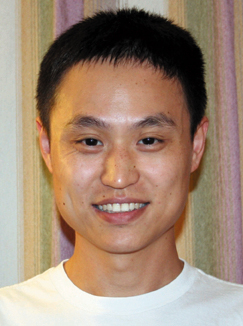
| Jane Huang, founder of Dragon Technology Solutions |
 |