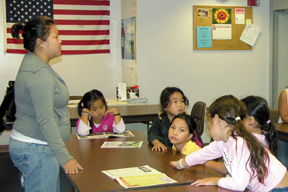
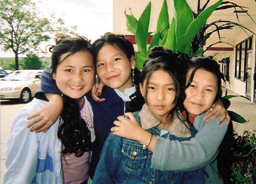
| Go Hmong Pdawb Vang, Go Hmong project coordinator, is 18 years old and was born in Madison. Her parents were from Laos and later moved to a refugee camp in Thailand and then to the U.S. She knows firsthand the difficulties faced by a Hmong family transplanted to a foreign land. Aside from "regular" societal barriers, the struggle to sustain a big family adds to the difficulty in getting a higher education. "We're 11 children in the family; and I'm in the middle," Padawb said. "I haven't graduated yet, but we're working on that." Padawb then focused on her role in the formation of Freedom Inc, which she considers to be a life-changing and positive experience for a youth her age. Her being in "that situation" helped her play her role very well. "I was in the Asian Freedom project group where we discussed racial profiling and did a lot of fund-raising," she recalled. "And because we wanted Hmong classes in the schools, we did a survey, proposed it to the school board, and I think they're having Hmong classes this year!" Go Hmong is a weekly discussion group for girls conducted in three different neighborhood sites: Northport, Kennedy Heights, and Bayview. Padawb leads discussions on topics that range from fun and trivial to interesting and serious, depending on the group's preferences. For "serious" topics, there is no open group discussion ... yet. "We talk about sexual assault and domestic violence," Padawb admitted. "But if they don't feel like talking -- we bought them journals, they write in there. I read them and give them back and tell them about what I thought about their journal entries. If there are serious matters there, I pull them aside and have them come and talk to Kabzuaj. These girls are in middle school, elementary, and some of them are in high school." The most serious problem Padawb read about is domestic violence in the family, and although sexual assault has not come up as an issue, Padawb thinks it has been happening. "We do know through hearsay that a participant has experienced that -- and Freedom Inc has worked with young girls who are victims and survivors of rape and sexual assault. [As far as new participants are concerned], I think they just don't disclose it; it's too shameful." Go Hmong's regular activities, all planned by Padawb, consist of games and topics that are children-oriented, value-oriented, informative, and educational. "We play games that have to do with a topic," |
| Note: Please send your contributions to Freedom Inc at 601 Bayview, Madison, WI 53715. Contact Kabzuag Vaj at (608) 661-4089. |
| Kabzuag Vaj and the women of Freedom Inc Go Hmong: Empowering Hmong girls (Part 2) by Heidi M. Pascual |
 |
 |
| In last month's issue, Kabzuag Vaj discussed how and why she started Freedom Inc and described the details of the programs they provide primarily for women, children, youth, and families in the Hmong community. This installment will continue that discussion, with additional comments from Go Hmong project coordinator Pdawb Vang. The final installment will focus on the Vin Ncaus project coordinated by Mee Vang. |
 |
 |
 |
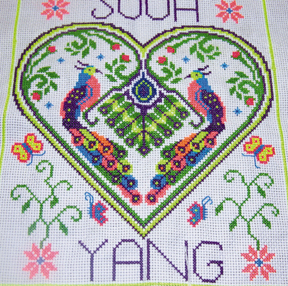
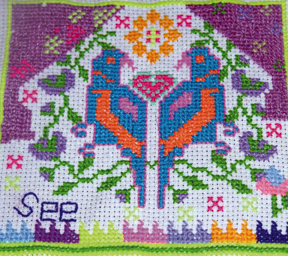
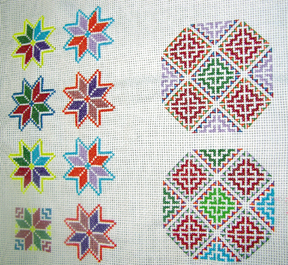
| Padawb said. "For example, I had them write, using white color on a blank piece of paper, a secret message to one of their friends who is going through a hard time, something that the friend can look at; then they color over with a different color, and then you could see what they wrote. It's really cool; they enjoy that." Padawb also gives Go Hmong participants homework. For instance, after watching three movies: "One Wife's isn't Enough," "A Marriage of Abuse," and "Death in 'Thailand," Padawb asked them to write what they felt about the movies and what they know about the Hmong culture in relation to those movies. The girls' feedback differed. "In Bayview, the Hmong-American girls thought that it was wrong, that the Hmong wife who's beaten by her husband in one of the movies should just run away and never come back," Padawb said. "When they returned their general entries, I just wrote back, 'She can't run away, she has to go back to her family'." The new Hmong arrivals thought 'it was nothing.' "There was this one girl who said she wouldn't mind if her husband married a second wife," she continued, with a worried look on her face. "I sounded out, 'You know, it's wrong.' The girl argued and said 'It's normal'." Kabzuag Vaj emphasized that educating young minds takes a while so Go Hmong uses peer-to-peer education because a youth connects better with youths than adults do. As Padawb noted, the girls opened up to her very naturally. "They've been very talkative," Padawb said. "Before, they didn't say much. Many of the Hmong American girls who didn't attend school or skipped school had problems. I directed them to somebody in school who could help them and now, they're doing OK." Other Hmong girls whose mothers are in bad relationships would ask Padwb for help, or resources. "They knew how to ask her," Vaj said matter of factly. "Whereas before, they would never have gone outside of the family. So those are the kinds of changes that we're seeing." But the Go Hmong project is the least funded of all Freedom Inc's programs. "We've been operating for the last two years on $2,000," Vaj lamented. "We've also used our domestic violence funding because it has a lot to do with prevention and stuff, but from the city, we only had $2,000 to do this." Go Hmong can't do anything outside the community centers due to lack of funds. "We don't have enough funds to provide them with anything," Padawb said. "For instance, the new refugees wanted to go to Goodman's pool or to East Towne Mall, but we don't have either transportation or money for field trips." Vaj explained that despite resource limitations, Go Hmong comes up with unique activities that the girls truly enjoy. "Our services are very unique that women and girls feel very comfortable here," Vaj said proudly. "Young people who are labeled 'trouble makers' consider this office their home." She then showed some of the Go Hmong girls' needle work under the Paj Ntaub project. "This is unique to the refugee group in the sense that youths 6-7 years old in Thailand refugee camps were taught to do this," Vaj said. "Hmong Americans buy their products and wear them. For a lot of Hmong women, it's always been a tradition to sit around together and do Paj Ntaub, this art work. So we use it as a teaching tool: just sitting down and doing paj ntaub while they're talking. These are crafted from their own thoughts." Vaj also explained why Freedom Inc brings Hmong girls to funder's meetings. "We want to show Hmong girls, especially the ones who just arrived from Thailand, that Hmong women can be in all aspects of the community," she said. "We don't only have to be housewives; we don't only have to be good sisters and mothers. We can be political; we can be out in the community. And that's what we really want -- that opportunity to show Hmong girls different avenues of life." Proud of what Go Hmong has accomplished, Vaj observed, "I think the best thing about the Go Hmong project is that while we're developing younger leaders, we're developing Padawb as a leader herself. It's multifaceted. Padawb is working with the younger generation, and as older women, we're working with Padawb. That's always been the focal point of our project." Part 3 and last installment of this article will focus on the Vin Ncaus project. |
| Quilts made by Go Hmong participants |
 |