 |
 |
| Cambodian New Year 2006: "Honoring our elders" Part 1 of 2 by Heidi M. Pascual |
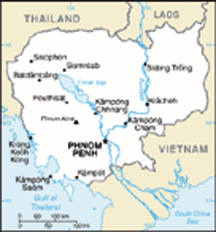
| Theravada Buddhism is the religion of the ethnic Khmer who constitute about 90 percent of the Cambodian population. the Khmer carry this belief wherever they end up settling down. To them, suffering exists; desire causes it; stopping desire can release one from suffering; and enlightenment (or part of it) can be attained through following teh "right eight-fold" path in everything they do (belief, intent, speech, conduct, livelihood, effort, mindfulness, and meditation). Nirvana is the Buddhist belief of salvation, which can only be attained by good karma in this life. Karma's popular interpretation is that misfortune or accomplishment is caused by actions in this or past life. Major Cambodian annual festivals are connected with Buddhist |
 |
 |
 |
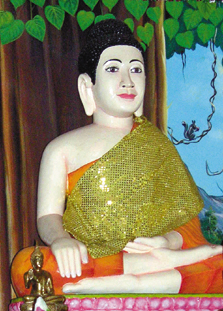 |
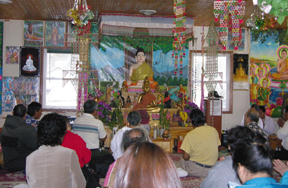
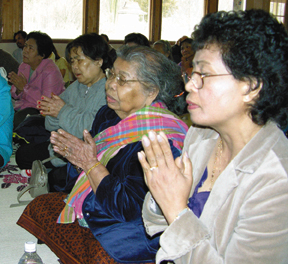
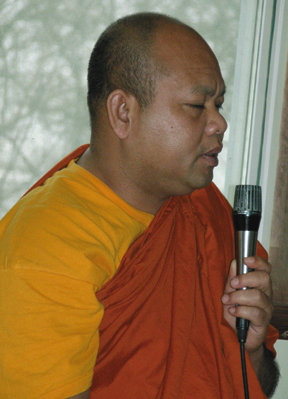
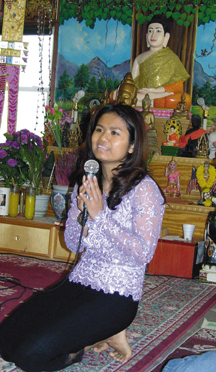
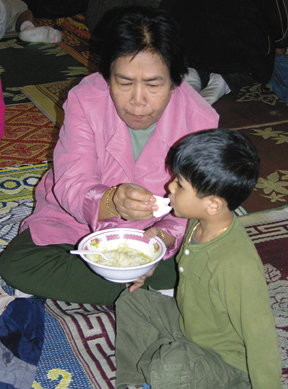
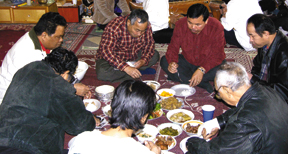
| observances led by a Buddhist monks. In Wisconsin, Cambodian refugees (many of whom survived the Khmer Rouge terror in mid-'70s), immigrants, and their families clebrate similar gatherings in accordance with this tradition. One event witnessed by this author on April 1 was dedicated to the elderly, at the Theravada Buddhist Temple (called wat) in Oregon. It was a prelude to the big New Year's (chol nam) celebration held on April 15 (watch for it in Part 2 of this article). To the Cambodians, as in many cultures, the elderly people are highly respected; thus they should be greeted first and last. The celebration started with music performed by Angkor Reaj, a Khmer traditional band, followed by the much-awaited prayers and chanting with a Buddhist monk seated on a platform with food offerings. The 30-minute ritual was very solemn, punctuated only by repetitive responses from the attendees. At noon, the monk ate first and when he was done, food was served to circles of leders with their families and guests. There was also a buffet table where noodles, rice, sauce, spices, fish, vegetables, and dessert were offered to all. The elders' faces glowed with pleasure as they received gifts especially prepared for them by the Khmer Association headed by Savang Lovan (right photo). |
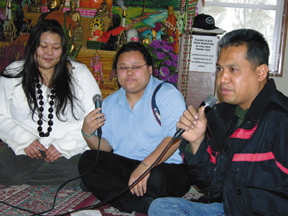 |
| The event was a collaborative effort by Freedom Inc. led by Kabzuag Vaj, SEA Wisdom-Cambodian led by Bophia So, and the Khmer Association of Wisconsin. "This important occasion is to honor our elders in our community," said Lovan of the Khmer Association. "We want to show them how we respect them so we'll give them gifts." "We at Freedom Inc. are one with you in celebrating and honoring our elders in the Cambodian community," True said. "Like the roots of a plant, we have to nurture our elders, "Bophia So [right] told this writer. "We have to water them in order for the plant to grow and bear leaves and fruits." While the event was in honor of the elders, it was also intended to mold the young minds of Cambodian children and teen-agers who grew up Americans or were born on U.S. soil to treat their parents, grandparents and others older than them with respect. Local Cambodian and Hmong leaders werlocmed Khmer and non-Khmer participants to the gathering that can only be described as a reminder that Cambodian culture is alive and well in Wisconsin. |
 |
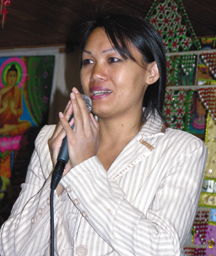 |
| Freedom Inc. staff and Sophea Mouth address the gathering. |
 |
| The Elderly Project by Bophia So Kabzuag Vaj, the founder of Freedom Inc, has been helping the Hmong community counter domestic violence toward women and children. She believes that happiness starts in the family. Like the Hmong community, the Cambodians (Khmer) also need similar services that remain unavailable due to language and cultural barriers. With her help, I initiated a collaborative effort with the Khmer Association to find ways to reach the elderly and provide them with information on available resources such as translation services. In one of our meetings, we learned that there is a major need for transportation. In order to learn more about their needs, we decided to provide a meal for them, start a meeting with them in a way that is pleasant and festive. This initial project, as described by above article, lasted three hours. The elders were very pleased to finally get some attention, and felt loved that the youngsters provided them a big meal and gifts. I am continuing this connection with the elderly by providing transportation, referrals, and interpretation services. |
 |
| to homepage to May '06 Issue Preview |