
By Kerri Meulemans
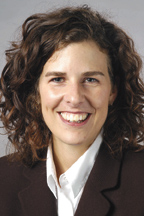
In their newly published book, "Democracy at Risk: How Political Choices Undermine Citizen Participation, and What We Can Do About It," the group explicates an agenda for reform.
Walsh attributes the lack of civic participation among Americans to individual issues and issues of public policy.
According to the book, there are indicators that the public has become increasingly removed from politics. For example, in 2002, only 15 of 435 congressional races were decided by 4 percentage points or less; and in the 2004 presidential elections, despite the overwhelming efforts to recruit voters, voter turnout increased by just 5 percent over 2000. /Minorities often face additional barriers to civic participation. These barriers can mainly be attributed to their perceptions of political leaders, including lack of trust in public policy leaders and their decisions.
"All people face barriers to participation, but sometimes these barriers are indeed larger for people of color," said Walsh. "For example, on average, racial minorities (in particular African Americans) tend to be less likely than non-Hispanic Whites to believe that public officials are responsive to their concerns. This can dampen the desire to get involved politically."
These issues spark questions of how to increase the quality of civic participation among minorities, and of Americans in general. "Increasing the quality, not just the quantity, of civic engagement is very important," said Walsh. "We would like to see engagement that enables people to send clear messages to public officials. Voting is important, but it is often difficult for public officials to tell exactly what people mean when they vote for a given candidate. Institutionalizing means of participation, in which people communicate directly with public officials and have real decision making power in these processes, would enhance civic engagement."
Walsh likewise highlights the importance of institutions in civic engagement, such that they can and do have negative and disconcerning effect, particularly when minority participation is involved. She illustrates these effects through the example of commissions redrawing district boundaries.
"Commissions that redraw representation district boundaries are partisan commissions in many states and have access to information about the place of residence of incumbents and the partisan makeup of neighborhoods," explained Walsh. "This results in districts that are homogenous politically, protecting incumbents from defeat, and reducing competition during elections. This may decrease interest in elections and prevent qualified people from running for office."
Homogeneous districts are not the only factors that discourage minorities from civic engagement. "Minorities are discouraged from civic engagement in various ways, and this occurs for both institutional and socioeconomic reasons," Walsh continued. "Lower household incomes and lower levels of education are clearly related to lower levels of political participation. Therefore socioeconomic reasons partly explain low levels of engagement among people of color.
But some laws, the shape of some government institutions, discourage participation among people of color, as well. Since disproportionate numbers of African Americans are incarcerated, laws that prevent felons from voting once they have served time have a disproportionate effect on participation levels among African Americans. Also, some progressive-era reforms, such as changing district representation to at-large representation, [create] disadvantages [for] minority candidates.
Walsh and her coauthors propose various remedies for the lack of civic involvement among minorities and Americans in general, each with their own set of implications for the future salience of political agendas.
"Some of the things we suggest would require office holders to give up some power," Walsh asserted. "For example, we suggest that cities institute neighborhood advisory boards, in which local governments give people meeting in their neighborhoods real decision-making power. Also, instituting nonpartisan redistricting would require Democrats and Republicans to agree to insert more uncertainty into the future elections and weaken the electoral security of some of their incumbents. While we see these as disadvantages, the potential benefit to the quantity, and more importantly quality of engagement, are indeed advantages."
Beyond the factors of quantity and quality, Walsh and her co-authors put a strong emphasis on equality. "By equality, we mean engagement that involves people of all racial, ethnic, and socioeconomic backgrounds," said Walsh. "We would like to see a time when we do not see huge disparities in income level among those who participate and those who do not." Walsh recalls that in 2000, for example, among people with household incomes over $75,000, 90% of eligible voters voted. But among people with household incomes under $15,000, less than 50% of eligible voters voted.
"We would also like to see a time when people of different racial and ethnic backgrounds participate together," she said.
"Currently, segregation in living patterns, as well as in the groups people join, means that civic engagement usually occurs among people of similar racial and ethnic backgrounds. This prevents people from understanding the concerns of people who have had very different experiences, and prevents cooperation."
In order to ensure future political cooperation, the book offers nearly four dozens practical suggestions. Among these are: declaring election day a holiday; taking the redistricting process out of the hands of politicians; shortening the presidential selection process; encouraging more civics education; mailing polling place information and sample ballots to voters; rigorous enforcement of fair housing laws to ensure diverse communities; encouraging city-wide systems of neighborhood councils; and clarifying federal tax rules that discourage involvement in public policy-making by non-profit groups.
It is the first pronouncement by political scientists as a collective to say, "Here's how institutions themselves affect civic engagement, and here's what we can do to change it," said Walsh. "We make recommendations that are pretty bold."
Walsh wanted this book to contribute by sharing with the public a wealth of knowledge on political communication. "It is important to me to use my privilege as an employee of a public university to communicate what I know to the public in a form that can be used by people other than academics," she said. "As a political scientist whose passion is civic engagement, it is essential to me to find ways to enhance the quantity, quality, and equality of political participation in this country. I, along with the other authors, hope that this book is a step in that direction. Writing the book also helped me to focus my own research toward questions that can address issues underlying the lackluster nature of engagement we observe."
Walsh spent a great deal of time and effort investigating how citizens in urban and metropolitan areas can increase their civic and political participation. "Our concern is much broader than voting," said Walsh. "The book grew out of the idea that we needed to put together a summary of what political scientists know about how the political process itself influences whether or not people become involved as citizens."
In conclusion, Walsh acknowledged those who helped put the book together. "We brought 15 people together in 2002, and the group eventually grew to 19. We spent two years meeting, writing, and doing research and passing the manuscript back and forth; it was very much a collective endeavor," she said.
Katherine Cramer Walsh is an assistant professor in the departments of political science and journalism and mass communication at the University of Wisconsin-Madison.
Democracy at Risk: How Political Choices Undermine Citizen Participation, and What We Can Do About It,? is published by Brookings Institution Press. It was part of a recent effort by the American Political Science Association to have political scientists take a more proactive role in the nation?s conversations about democracy.

