
The stalled state of the Hmong Cultural Center
By Ben Freund
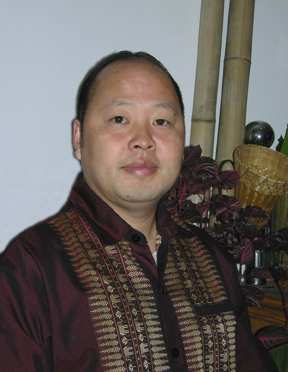
Peng Her has become increasingly disillusioned of his efforts to support his fellow Hmong by building a Hmong Cultural Center in Wisconsin --distinctive for its relatively large population [over 65,000] and
Planning for a Hmong Cultural Center in Wisconsin began about three years ago when community leaders in Milwaukee outlined their plan for a Hmong community center, for which $3 million of funding was formally requested.
In order to pass the two-year budget through the state senate, Republican supporters were obliged to use pork barrel politics to assure the cooperation of then Milwaukee senator Gary George, who insisted on the full funding of the Hmong Cultural Center budget to be built in Milwaukee with virtually no state oversight. Unfortunately, Governor Doyle was obliged to veto George's additions to the budget, since George at the time was the target of many recall petitions and subsequently recalled after being convicted of conspiracy and several other charges a few months later. Doyle instead set aside $100,000 for a sincere feasibility study and plan for the center. If the study and plan proved sound despite George's unseemly haste to acquire more money for his district, Doyle would approve the full funding.
"I'm pleased that the building commission supported my proposal to fund the initial planning dollars for the Hmong Cultural Center of Wisconsin," Governor Doyle was quoted as saying at the time, declaring "this important step moves the process forward the right way so we can build a Cultural Center that will represent many diverse views from the Hmong community and will be in place to preserve the great culture of the Hmong for future generations."
/After years of planning and surveys of Hmong opinion, the Hmong community leaders felt ready to present their plan. They envisioned a major, nationally-accessible, Hmong Cultural Center in Madison, easily accessed by both the local Hmong population and visitors from the local airport, with a large room for public gatherings like the Hmong New Year and facilities like classrooms for after-school education and adult English literacy. Also planned was a museum of Hmong culture and history to preserve the roots of Hmong culture as it changes and the Hmong adapt to American citizenship. The Center would function as a model and headquarters for other, smaller community centers in cities with large Hmong populations around the state. In addition, the plan pledged $2.5 million-worth of support from private interests to match $2.5 million to be provided by the state, which was $500,000 less than the original request.
Despite Doyle's previous assertion that the Center needed only a successful planning and feasibility study to be granted funding, the Joint Finance Committee vetoed the new proposal, with committee members like Sen. Rob Cowles of Green Bay questioning whether lawmakers supporting the project "would offer to build a cultural center for each of the many other ethnic groups in the state." Presumably a rhetorical question, since only five years before, the committee granted $2 million for the foundation of a Swiss Cultural Center in Wisconsin. "To me, this sends a clear message to the Hmong and other minorities that [it's easier] to get state funding if you were White," Peng Her lamented.
But he has not given up. "[The lawmakers] may or may not know who the Hmong are ... maybe they don't care," Peng Her stressed. "What they care about is how many votes or how much money you have." But with local and statewide support he has mustered over the years as part of a Hmong grassroots coalition which began with telling my friends, [and] making phone calls, Peng Her is determined to build a solid foundation for the growth of the Hmong community in Wisconsin. He added, "As the Hmong population continues to increase, so would the Hmong votes and their economic contribution to Wisconsin. I will continue to pursue our need for a Hmong Cultural Center."
Peng Her can be reached at pengher@sbcglobal.net.

