
by Jonathan Gramling
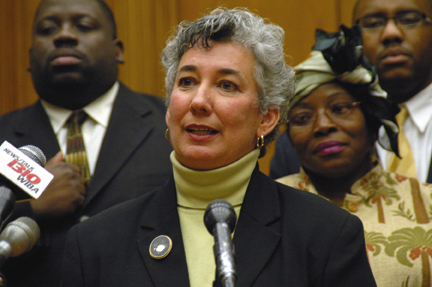
Nuņez is an unassuming person --some call her egoless -- who is adept at bringing people together for a common cause. She also has a big heart as evidenced in the interest she took in the children and families -- primarily Latino -- who came to Centro each year.
While Nuņez is most closely identified with Latino issues, her background reflects a cosmopolitan approach to life. A native of Cuba, Nuņez's family moved to the U.S. Virgin Islands when she was young. Most of the community leaders in the islands when Nuņez was growing up were of African descent. Nuņez also attended private schools in the Northeast, was a Peace Corp volunteer in Guatemala, and worked at Stanford University before coming to Madison in 1999 to take the helm at Centro.
Nuņez will rely on her staff when running the department. While she will clearly be in charge, she treats the people she manages as peers, utilizing their expertise and experience. "I like to bring people to the table," Nuņez said. "I'm not afraid of controversy. I'm not afraid of people disagreeing with me. I like to listen to people and I believe that is something that is necessary for us. These two agencies have been in a lot of turmoil. I think it is necessary that someone really brings the staff together. There is a healing process and a time that we can spend to create something and to build a new culture -- not to take away anything from the past, but I really want to strengthen and build on the foundation we have."
Nuņez believes in education and having the broader community buy into the need for civil rights. "I think there are a lot of people who believe that civil rights has nothing to do with them," Nuņez reflected. "I think we need to work on helping people develop a collective 'this is our responsibility and our cause' sense of responsibility. It's not just a gay cause or an African American cause or a Latino cause. It's 'our cause.'"
However, while Nuņez is clearly committed to educating the community, she is firm in her commitment to the department's role in enforcing civil rights laws. "There are laws that need to be complied with," Nuņez said. "We need to maintain and enforce the laws in the proper way. We have compliance as well, for businesses and agencies that work with the city of Madison."
Nuņez also feels that it is important to look at the underlying causes of disparities in the community. "We have to look at disparity in terms of income and education," Nuņez emphasized. "What is going on there? It's not just our responsibility, but how do we think about the continued gaps that we see? When you look at people in manufacturing, those are well-paid jobs. But you still have African Americans and Latinos being paid much less than their White counterparts. What's going on there? We have to dig deeper into some disparity issues and find out what's going on there."
While the DCR needs to play a leadership role in pushing the civil rights agenda in Madison, Nuņez clearly doesn't plan to go it alone. "I think the department needs to be a leader in setting the civil rights agenda," Nuņez asserted. "I think we need to be a voice. But I can't push you to change your ways of looking at it or your hiring practices until you see this as important. We can be a leader, but we need other community and business leaders involved. Every single entity that is involved in civil rights in Madison needs to be involved in this and setting that agenda and making it 'our' agenda."
The Madison Common Council will consider Nuņez's confirmation on January 3.

