
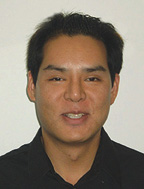
by Ken Tanemura
From 1995 to 2004, Wu taught at Howard University as the only Asian American on the faculty of an African American school. While teaching at Howard, he served as clinic director for two years.
Wu published a landmark book in 2002, "Yellow: Race in America Beyond Black and White," which included a chapter titled "The Power of Coalitions: Why I Teach at Howard." In this chapter, Wu wrote, "By becoming more conscious of
According to Wu, Asian Americans are stereotyped as nerds, geeks, rocket scientists, and maybe Kung Fu masters, but not as someone who hunts or shoots. 'Maybe no jury would have believed that he was called racial slurs, even if he was telling the truth. Vang may have been the first Asian American to have committed a hate crime. He may have remembered all the times he was taunted, but this time he was armed and was able to fight back. But we'll never know," Wu said.
While Vang was not convicted by a jury of his peers, and while some argue that the press was biased in its reporting of the Vang case, few Asian Americans stood up and spoke out. "African Americans have always had strong leaders and they insist they have a seat at the table. Maybe the time has come for Asian Americans to play the role of an outsized personality, bigger than life, someone who won?t take no for an answer," Wu said.
Douglas Kobayashi, a security enforcer and former research assistant to Wu, remembers proofreading chapters of Yellow. "I got the sense that there was no Jesse Jackson to rally us together, but actually Frank might be that person," he said. "Frank is one of those leading voices."
In Wu's estimation, strong Asian American leaders can be cultivated. What's the challenge? "Asian Americans have to throw off the image that others have created for us, the script that they've written for us to follow," Wu said. And according to Wu, Asian Americans didn't claim the Chai Vang case as something that pertains to them.
Wu believes that in general, the Hmong community distanced itself from Vang and disavowed any knowledge of him, that many were among the first to say that if he was guilty, that he should have been punished. "Other Asian Americans said we're urban, we're cosmopolitan, we're from the East or West Coast," Wu said. "It's a drama with a set of competing stories. For those of us who aren't Hmong, who aren't Midwestern hunters, it's easy to dismiss it as a news story. One of the challenges is to show that it always has something to do with you."
Why has Frank Wu been so involved in analyzing the Chai Vang case? According to Alice Mong, executive director of the Committee of 100 (a civic group founded by Yo-Yo Ma and I.M. Pei, among others, to promote Asian American political participation), issues around the lack of coverage and the cultural conflict involved will make it a controversial topic down the line. "Here in New York, I haven't seen much coverage about the Vang case," Mong said. "Whereas with the Vincent Chin case, there was much more coverage and more Asian Americans responded to it."
While Wu has done a lot to help create an Asian American stance on issues from Affirmative Action to the Vang case, his overall impact on society can?t be reduced to a handful of achievements. UCLA law professor Jerry Kang, who co-authored the pro-Affirmative Action paper, "Beyond Self-Interest" with Frank Wu and others, said, "As a public figure, Frank's impact is not pinned to one policy; he's been a trailblazer in showing how to break through glass ceilings and boxes, and by doing extraordinary work as a teacher, activist, and public intellectual."
Wu may be Asian America's only true public intellectual, appearing on the Oprah Winfrey Show, CNN, NPR, The O'Reilly Factor, Fox Movie Channel, and other public venues to talk about important issues.
"Other people like Helen Zia have made the issues public, but I think Frank is the most articulate," Mong said. "He can talk about identity issues to young people and take a heavy topic like race and make the audience relate to it."
Taking a topic that could be handled in a highly specialized way, and presenting it in a way that makes sense to the average person, has always been one of the roles of the public intellectual. "Frank's remarkable public speaking abilities -- in the media, in debates, in speaking engagements -- have impacted public thinking on issues that influence Asian Americans, and he has altered the way the audience thinks about Asian Americans," said Kang. These days, Wu has even more opportunities to get his message across. At Howard, Wu was expected to teach. Now as the first Asian American and the first racial minority to be dean of Wayne State University's law school, Wu shoulders more responsibility. He's expected to play a leadership role, and to help lead an institution. But that's not the main reason Wu took the job as dean at Wayne State.
"I did this because I grew up in the city of Detroit," Wu said. "In 1967, the year I was born, there were race riots in Detroit, and the city has never been the same. I wanted to leave when the Vincent Chin incident happened. I thought that could have been me. I could run into someone who's had a few too many drinks. So I went to San Francisco and D.C. I came back because I'm convinced the city is coming back; there's a growing Asian American population, and the All Star Game was played here. It's important to go to those places where we're not expected, where we have responsibilities," Wu said.
So what's next for Wu? He wants to write a book about the Vincent Chin case because it happened in Detroit and because it's the hate crime that galvanized the Asian American community to take action. "I want to write a book about the Asian American community, about the Midwest, about the 1970s," Wu said. "I want to use the Vincent Chin case to think about the context."
In Yellow, Wu wrote about being the first Asian American on the faculty at Howard Law School, and about the importance of having a place where people of color are the majority and hold most of the leadership positions.
Now as dean of the Wayne State University School of Law, Wu is faced with a different set of challenges and opportunities. "I wasn't elected to be an Asian American spokesperson, but when you have a public position of public prominence, it's an opportunity to show that Asian Americans are articulate, that we're here to stay, and that we're stakeholders," Wu said.
Frank Wu can be reached at (313) 577-3933, or frankhwu@wayne.edu.
