by Heidi M. Pascual
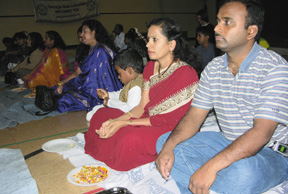
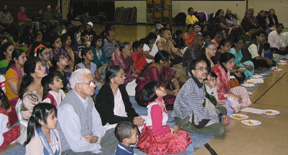
Local Hindus belonging to the American Hindu Association celebrated Deepawali on November 12 at Jefferson Middle School (Madison) with a special Lakshmi-Ganesh puja (the act of showing reverence to a god, a spirit, or another aspect of the divine through invocations, prayers, songs, and rituals) conducted by priests from the Hindu Temple of Wisconsin.
An article from the Smithsonian Institution that explains the importance of puja says:
An essential part of puja for the Hindu devotee is making a spiritual connection with the divine. Most often, that contact is facilitated through an object: an element of nature, a sculpture, a vessel, a painting, or a print.
Wherever puja is performed, it includes three important components: the seeing of the deity; puja, or worship, which includes offering flowers, fruits, and foods; and retrieving the blessed food and consuming it. By performing these sacred acts, the worshiper creates a relationship with the divine through his or her emotions and senses.
Puja is a multi-sensory experience. One observes the offering of the lighted lamps, touches the ritual objects and feet of the deity (where possible), hears the ringing of the bells and the sacred chants being recited, smells the incense, and tastes the blessed food offered at the end of the ritual.
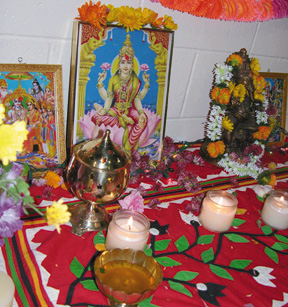
Hindu images are said to help devotees understand divinity. They are considered sacred and serve as visual metaphors to express the invisible divine reality. The priests in this particular event invoked the spirit of the gods to enter the images. For the duration of the ceremony, the images were thought to contain the divine beings' presence.
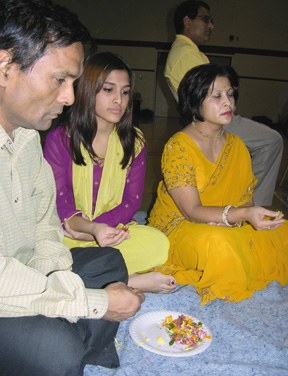
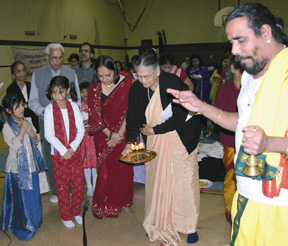
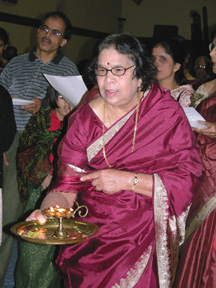
Local devotees -- facing an altar with images of Lord Ganesha and Goddess Lakshmi and decorated with flowers and lights -- sat on blankets with plates of fresh flowers. In prayer, each of them held bits of petals and raised them just across their hearts. The worship ceremony included chants and sloka of Lord Ganesha, as well as bhajans or songs about the beauty of Lakshmi. They all stood in front of the altar and sang an Aarati. The sweet smell of incense permeated the air as each devotee approached the altar with a lighted lamp.
To the Hindus, these lights will "remove darkness" in the world and guide their -- and our -- lives forever.
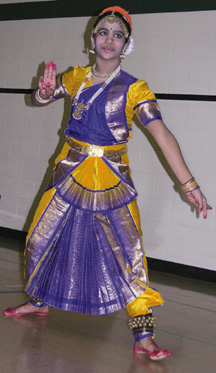
A cultural program featuring religious dances from India and Nepal and a sumptuous meal for everyone were shared with families and guests alike.