| Jeff Vinluan receives the NASA Silver Snoopy award By P. Emraida Kiram |
| most prominent Filipinos and established community leaders, so people do not usually ask "Jeff who?" / When I found out that Jeff was a recipient of the Silver Snoopy award, I paused and said "wow." This award may come as a surprise to many, but I actually have heard of the Silver Snoopy Award. Have you? I will indulge you, but first, about Jeff. A few days before last Christmas he got this letter from National Aeronautics and Space Administration (NASA) Astronaut Barbara Morgan that said: "To show our appreciation for your accomplishments, please accept the astronauts' Silver Snoopy award for professional excellence. Please wear it with deserved pride, knowing that it is given only to those few individuals we regard as the best in their profession. Your Silver Snoopy was flown on STS-98, (Shuttle Transportation System) ISS (International Space Station) Assembly Flight 5A. "This letter is presented on behalf of NASA's Astronauts to express our appreciation for the outstanding support you have provided to the International Space Station Program. As the Boeing Electrical Power System focal point to JAXA (Japan Aerospace Exploration Agency, formerly NASDA -- National Space Development Agency of Japan), you have successfully managed the test activities and technical reviews. Your collaborative efforts on the single bus power system architecture of the H-II (one of Japan's rockets) Transfer Vehicle (HTV) resulted in a new redundant architecture to assure safe operation of the HTV re-supply vehicle." I was so awed, I would have liked to shake his hand. After graduating from Marquette, Jeff went to Regis University in Denver, Colo. and then to Washington University in St. Louis, MO, where he graduated with dual degrees in math and rngineering, major in systems engineering, cum laude. Six months prior to graduation, he received a contract to work at the Boeing (called Rockwell International) facility in California. His wife, Marybeth, also a systems engineer, worked with him at Boeing. In 1990, Jeff started working on the International Space Station Program. Jeff is at the Kennedy Space Center each time there is a liftoff -- something most of us just see on our T.V. screens with mounting anticipation and feelings of considerable greatness. Now we know that someone from Wisconsin is there to represent all that is best in us. Jeff received the award on December 13, 2005. The Silver Snoopy Award Of all the Space Flight Awareness (SFA) Awards, the Silver Snoopy best symbolizes the intent and spirit of Space Flight Awareness. An astronaut always presents the Silver Snoopy because it is the astronauts' own award for outstanding performance, contributing to flight safety and mission success. It is always a special honor to receive this award: fewer than one percent of the space program workforce receives it annually. The award is a sterling silver Snoopy lapel pin that has flown on a Space Shuttle mission, in the form of Snoopy wearing a space helmet and a space suit. plus a certificate of appreciation and commendation letter for the employee, both signed by an astronaut, citing the astronaut's appreciation for outstanding performance. To meet the criteria, the individual's work must relate to flight safety or mission success. Job performance must be outstanding to distinguish the individual in his particular area of responsibility, and it must make a meaningful contribution to flight safety or mission success. The history and the meaning of the award Upon the completion of the Mercury and Gemini Programs, NASA took steps to renew and invigorate consciousness of flight safety and quality performance in the space program. The associate administrator for Manned Space Flight asked NASA centers to expand their assistance to government and contractors in the area of employee motivation. The Apollo program director had previously suggested that NASA develop a program to heighten awareness of the need for superior performance and quality in flight systems. At that time, studies revealed that a substantial number of problems encountered during the Mercury and Gemini programs was caused by errors and lack of attention on the part of individual workers. Because of the complexity of the Apollo/Saturn effort, which involved hundreds of thousands of workers in plants across the country, the associate director of the Apollo program ordered direct motivational action by what was then called the Office of Manned Space Flight (OMSF). Until then, OMSF motivational activities had been confined mainly to efforts at the Marshall Space Flight Center; e.g. a poster series, a traveling exhibit van, special films and briefings at contractor plants, and a trip for outstanding employees to see a space launch at Kennedy Space Center. In response to the request for additional effort, NASA initiated a review of existing industry motivational programs and ongoing government efforts. Although all these programs contained many excellent features, there was no direct reference to the Apollo/Saturn program, the astronauts, flight safety, or the importance of the national space program. Greater awareness of flight safety and a means for workers to identify with flight crews and their missions were needed. In reviewing government programs, NASA found Smokey the Bear of the U.S. Forest Service of particular interest. A l968 study revealed that Smokey was the best-known symbol in the United States: 9 out of every 10 Americans were familiar with him and his message. NASA had to find such a symbol -- one that was already accepted by the public, particularly the people working on systems for human space flight. The symbol had to emphasize flight safety and mission success, to act as a watchdog for manned flight. Snoopy, the precocious puppy from the popular Peanuts comic strip, appeared to be eminently qualified. He was a dog, he had previous flight experience (from the top of the doghouse) and he had national acceptance. People like to read what Snoopy had to say. NASA's Chief of Manned Flight Awareness decided to approach Charles Schulz, the creator of Snoopy, and ask if the astronauts might be permitted to adopt Snoopy as their personal safety symbol. An avid supporter of the U.S. space program, Mr. Schulz enthusiastically welcomed the idea. Both Charles Schulz and United Features agreed to let NASA use "Snoopy the Astronaut" at no cost. However, in the interest of preserving the comic strip character's integrity, certain and very reasonable guidelines were established. The Snoopy Award program continues throughout NASA and the aerospace industry as a highly visible effort to foster an environment of quality and flight safety consciousness in which employees know that excellence is always expected. As a symbol of this message, Snoopy is an effective motivational tool that also inspires and encourages new ideas to facilitate and improve space program operations. |
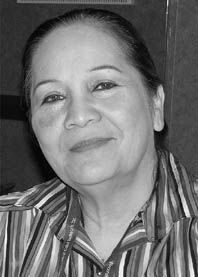 |
| I met Jeffrey Vinluan when he was a teenager, and saw him off and on during his high school years at Marquette University High School in Milwaukee. He graduated in l977. But then life goes on. Jeff is known to many in this community as the son of Alex and Shirley Vinluan, and for many, that is sufficient. Jeff's father is often referred to as "Dr. A" because he is among Wisconsin's |
 |
| to home page |
 |
| to April 2006 Issue Preview |