


Language and arts connect people and culture
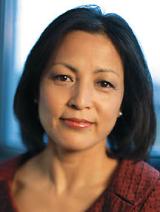
By Jian Ping
The dancing group of Dong Fang Chinese Performing Arts Association recently gave a
performance at the Confucius Institute in Chicago (CIC). The show was staged for
administrators, teachers and students of the Chicago Public School (CPS). I attended the
performance partially because a close friend of mine was a dancer in the group; and partially,
I had heard so much about the success of the Chinese language program at CPS, in which
CIC played a major role, that I wanted to learn more about it.
The Confucius Institute was located at Walter Payton College Prep, a public high school in
Chicago. When I arrived in the evening of the performance, I introduced myself to Jane Lu,
Director of the Confucius Institute. Lu, a Chinese in her 40s, extended her hospitality by taking
me to a large room where tables of Chinese food were offered and urged me to eat
something first. Many teachers and students gathered around the room, chatting over plates
of dumplings, egg rolls, Chinese pancakes, and noodles. The aroma of Chinese food
created a feeling of festivity. I picked up a few items, thinking the variety of food was a cultural
experience by itself.
The dancing group of Dong Fang Chinese Performing Arts Association recently gave a
performance at the Confucius Institute in Chicago (CIC). The show was staged for
administrators, teachers and students of the Chicago Public School (CPS). I attended the
performance partially because a close friend of mine was a dancer in the group; and partially,
I had heard so much about the success of the Chinese language program at CPS, in which
CIC played a major role, that I wanted to learn more about it.
The Confucius Institute was located at Walter Payton College Prep, a public high school in
Chicago. When I arrived in the evening of the performance, I introduced myself to Jane Lu,
Director of the Confucius Institute. Lu, a Chinese in her 40s, extended her hospitality by taking
me to a large room where tables of Chinese food were offered and urged me to eat
something first. Many teachers and students gathered around the room, chatting over plates
of dumplings, egg rolls, Chinese pancakes, and noodles. The aroma of Chinese food
created a feeling of festivity. I picked up a few items, thinking the variety of food was a cultural
experience by itself.
Jian Ping
I soon learned from Lu that there were 12,000 students enrolled in the Chinese
language program in 43 public schools in the city.
“This is the first time CIC organizes an event like this,” Lu said. “I want to create an
opportunity for all the school principals, teachers, and select students who are
involved in the Chinese language program to meet and share their experiences.”
I was very impressed. Chinese language, which was so different from the Roman
system, was very difficult to learn for Westerners. The fact that so many students
were making the efforts to learn it certainly indicated a genuine interest in
connecting with the Chinese people and culture. And Dong Fang, a performing arts
group primarily consisting of amateur artists from China, was connecting with
people of different ethnic backgrounds through their art forms.
As the starting time for the show approached, I went to the auditorium and secured
a seat in the front. I looked around me and saw the audience was a mix of White,
Black, Hispanic and Asian, a nice reflection of the population at large.
Soon, Dong Fang’s emcee, an American, stepped onto the stage. He introduced

| Elsie (in pink) on stage |
himself and told the audience that he had taken Chinese lessons at CIC himself. As if to prove his adequacy, he began to
speak in Chinese and immediately received a loud cheer from the audience.
With the voice of the emcee still lingering in the air, the music started and a group of women dancers gracefully appeared on
the stage. The familiar Chinese song, along with the traditional costumes the dancers were wearing, struck a core with me,
making me reminiscent about a culture and country far away.
I was mesmerized. The loud applause at the end of the dance brought me back to reality. I realized I was not the only one
who was captivated. While I was nostalgic, the rest of the audience must be touched by the universal language of music and
the beauty of dance.
speak in Chinese and immediately received a loud cheer from the audience.
With the voice of the emcee still lingering in the air, the music started and a group of women dancers gracefully appeared on
the stage. The familiar Chinese song, along with the traditional costumes the dancers were wearing, struck a core with me,
making me reminiscent about a culture and country far away.
I was mesmerized. The loud applause at the end of the dance brought me back to reality. I realized I was not the only one
who was captivated. While I was nostalgic, the rest of the audience must be touched by the universal language of music and
the beauty of dance.

Dong Fang Arts Performing Association at Confucius Institute in Chicago.



| If you want to make a difference in the lives of our residents, visit our website to view and apply for our current openings. www.oakwoodvillage.net Oakwood Village is a Lutheran church-sponsored, not-for-profit, locally operated organization consisting of two continuing care retirement communities, Oakwood Village East and Oakwood Village West, in Madison, Wisconsin. EOE |
| Caring for older adults through compassionate and excellent service |
A variety of performances
followed, from the elegant
dances of “Bamboo in the
Moonlight,” “Flowers in the
Rain,” and “Green,” to the
powerful singing of the
Beijing Opera and Puccini’s
Opera “Turandot,” the youth’
s martial arts, and children’s
choir, the evening was a
celebration of arts and
Chinese culture.
I located my friend, Elsie,
after the show and told her
that I felt the group’s
performance was so superb
followed, from the elegant
dances of “Bamboo in the
Moonlight,” “Flowers in the
Rain,” and “Green,” to the
powerful singing of the
Beijing Opera and Puccini’s
Opera “Turandot,” the youth’
s martial arts, and children’s
choir, the evening was a
celebration of arts and
Chinese culture.
I located my friend, Elsie,
after the show and told her
that I felt the group’s
performance was so superb
that they appeared to be more like professional than amateurs.
I especially enjoyed Elsie’s dance.
“You are amazing,” I said. “Your dance is beautiful and full of grace. How could you look so relaxed on stage?” I asked.
Elsie’s natural smile and movements showed she was having a great time on the stage.
“One minute on stage requires 10 years of practice,” Elsie said, laughing.
Changing to a more serious tone, she said: “The only way to create an energizing and captivated experience on stage is to
live in it and forget about yourself.”
I learned from Elsie that Dong Fang Arts Performing Association was founded in 2005, with a mission to “hold to a high-
quality standard of performance and to foster a growing appreciation amongst all peoples.” Dong Fang had over 150
I especially enjoyed Elsie’s dance.
“You are amazing,” I said. “Your dance is beautiful and full of grace. How could you look so relaxed on stage?” I asked.
Elsie’s natural smile and movements showed she was having a great time on the stage.
“One minute on stage requires 10 years of practice,” Elsie said, laughing.
Changing to a more serious tone, she said: “The only way to create an energizing and captivated experience on stage is to
live in it and forget about yourself.”
I learned from Elsie that Dong Fang Arts Performing Association was founded in 2005, with a mission to “hold to a high-
quality standard of performance and to foster a growing appreciation amongst all peoples.” Dong Fang had over 150
members in 5 groups: chorus, dance, theater,
Beijing Opera, and Chinese Variety Arts. They had
given more than 50 performances in the greater
Chicago area since its inception.
I left the auditorium feeling elated and inspired.
Institutions like CIC, CPS, and Dong Fang were
serving as bridges that connected different cultures
and peoples in our diversified society. I saluted
them for their efforts and dedication.
For more information on CIC and Dong Fang,
please check out their Websites listed below:
CIC: http://www.confuciusinstitutechicago.
org/index.html;
Dong Fang: http://www.dongfangarts.org/english.
htm
Beijing Opera, and Chinese Variety Arts. They had
given more than 50 performances in the greater
Chicago area since its inception.
I left the auditorium feeling elated and inspired.
Institutions like CIC, CPS, and Dong Fang were
serving as bridges that connected different cultures
and peoples in our diversified society. I saluted
them for their efforts and dedication.
For more information on CIC and Dong Fang,
please check out their Websites listed below:
CIC: http://www.confuciusinstitutechicago.
org/index.html;
Dong Fang: http://www.dongfangarts.org/english.
htm
Jian Ping is author of “Mulberry Child: A Memoir of
China. “ For more information, visit www.moraquest.
com or www.mulberrychild.com. Jian Ping’s blog,
which she keeps with a couple of other authors, is at
www.smearedtype.com.
China. “ For more information, visit www.moraquest.
com or www.mulberrychild.com. Jian Ping’s blog,
which she keeps with a couple of other authors, is at
www.smearedtype.com.